Lame-duck session faces defense funding and war policy hurdles
Congressional leaders face a tense lame-duck session as they debate the National Defense Authorization Act, a $350 billion reconciliation package, and the future of the Iran war.
By Claire Darwish ·
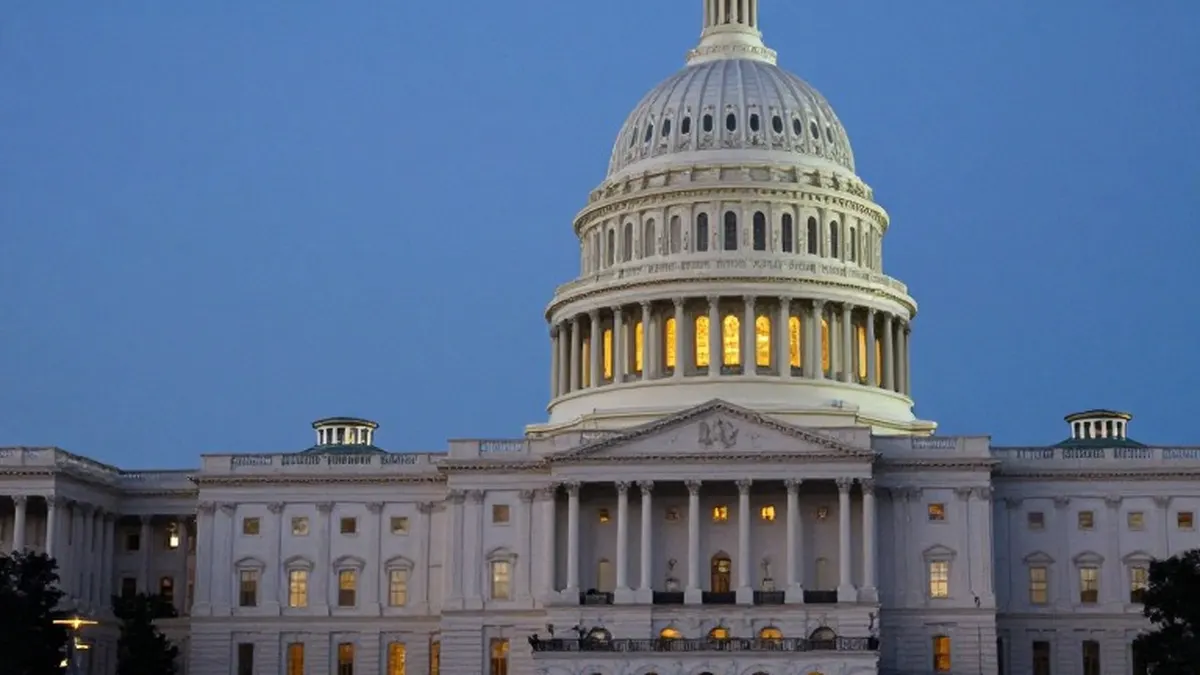
The upcoming lame-duck session in Congress is shaping up to be contentious as Democrats and the Trump administration appear to be moving in opposite directions regarding defense policy. Leaders of the House and Senate Armed Services committees are scheduled to meet twice next week to negotiate the National Defense Authorization Act, a significant defense policy bill that is facing an unusually difficult path to passage this year.
The NDAA has been a consistent part of the legislative calendar for more than six decades, but partisan disagreements are now putting that streak at risk. The core of the dispute centers on the Trump administration's record $1.15 trillion budget request. Democrats argue that the top-line figure needs to be reduced by hundreds of billions of dollars and that the bill should include specific guardrails to limit the ongoing war in Iran. The administration, however, remains firm on its initial request and is seeking even more funding through a separate party-line reconciliation package.
President Trump has intensified his push for the Senate to pass a $350 billion reconciliation package, which would contribute to his desired $1.5 trillion Pentagon budget. In a statement on Thursday, the president emphasized his commitment to rebuilding the military, claiming that the incoming Democratic majority in the next Congress aims to block this investment. Defense Secretary Pete Hegseth has similarly urged Congress to move the package through the budget reconciliation process, citing the need to safeguard national security.
Despite the administration's push, the $350 billion package is currently stalled on Capitol Hill due to disputes over its funding mechanism. Some Republican senators have privately expressed doubt that the full amount will be approved. The proposed package includes $48 billion for critical minerals, approximately $103 billion for autonomous systems and artificial intelligence, $47 billion for expanded munitions production, and $17 billion for the Golden Dome missile defense system.
Senate leaders on both sides are working to craft a deal to fund the government past the December 11 deadline. However, talks could be complicated by the use of the reconciliation process, which would allow Republican senators to bypass a Democratic filibuster to add billions in defense spending. Senator Mike Rounds of South Dakota warned that Democrats could simply subtract any funds added through reconciliation from the regular appropriations bill. Senator Thom Tillis of North Carolina noted that the White House's solo approach had recently led to a significant Democratic victory in the midterm elections, suggesting a different strategy is needed.
In the House, several Republican lawmakers have signaled they are prepared to block the reconciliation package unless the administration adopts a tougher stance on Russia. Frustration within the party has grown over recent policy decisions, including a deal to import Russian diesel and interruptions to Starshield satellite access that Ukraine relies on for defense against Russian attacks.
Meanwhile, Democrats in both chambers are calling for an end to the Iran war, which has persisted for more than eight months and contributed to rising energy prices. Some senators have stated they will oppose any short-term spending bill that does not include language restricting the administration's use of appropriated funds for the conflict.
Senator Tim Kaine of Virginia said he is working on a provision to block funding for the Middle East conflict within the next continuing resolution. Other Democrats, including Senator Patty Murray of Washington, indicated that their conference is considering all available tools to use the December 11 funding deadline as leverage in negotiations. The outcome of these negotiations will likely be determined when the Armed Services committee leaders meet next week.
More News · National news · Report a business · Got a Story?