African Insurgents Trade Slogans for Local Power
Al-Shabab and JNIM are dropping global branding to build local alliances and present themselves as governments in Somalia and the Sahel.
By Claire Darwish ·
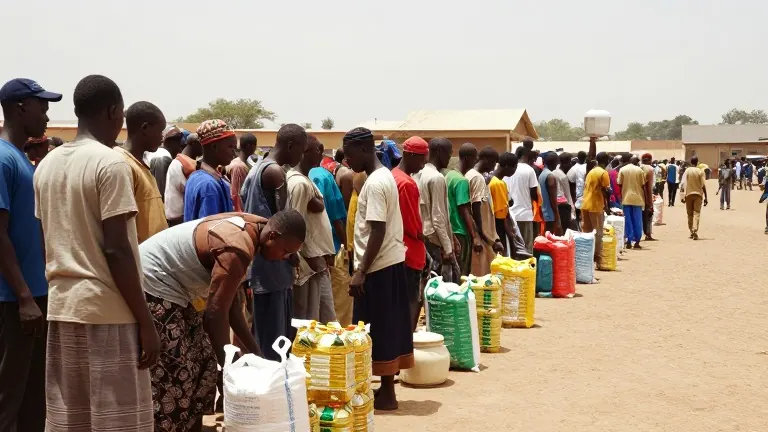
In August, al-Shabab distributed rice, pasta, sugar, cooking oil and beans to hundreds of families in rural southern and central Somalia. The group shared photos of the aid on social media and via its radio station, presenting the distribution as a charitable effort rather than a military operation. This marks a distinct shift in how the organization communicates with the populations it controls or seeks to recruit.
Al-Shabab controls large swathes of rural territory in the south and center of the country. Throughout 2026, the group has emphasized its humanitarian work to win over local communities. In one video, a local woman stated, "May God reward them," as supplies were handed out. The strategy aims to position the group as a provider of basic needs, not just a jihadist entity.
This local focus mirrors a tactical change in the Sahel. JNIM, al-Qaeda's branch in Mali, Burkina Faso and Niger, has altered its propaganda since late 2024. The group has dropped familiar al-Qaeda branding and slogans from its videos. Instead of citing global Muslim causes, JNIM now frames itself as a defender of ordinary people against corrupt and abusive rulers. It frequently accuses Mali's military government and its Russian allies of killing civilians.
In April, JNIM appealed to "all sincere patriots" to help build a "new Mali." The group promised security, justice and prosperity alongside Islamic law. It also suggested it could maintain "balanced relations" with Russia, a phrase echoing the diplomatic language used by Hayat Tahrir al-Sham (HTS) in Syria. This approach relies on building local alliances and reassuring potential enemies to avoid outside intervention.
The shift is partly inspired by Ahmed al-Sharaa, the new president of Syria. The former commander of HTS, once known as Abu Mohammed al-Jolani, rose to power in December 2024 after building a base in Idlib province. He broke ties with al-Qaeda and IS, focusing on local governance. In November 2025, US President Donald Trump welcomed Sharaa to the White House, spraying him with branded cologne and calling him a "very strong leader."
Sharaa's success has divided the jihadist world. IS declared jihad against Syria's new government, branding officials as "apostates" and launching attacks. Hardline clerics have taken similar stances but stopped short of open conflict. A bitter online debate has raged since 2025, with rival groups publishing books to defend their positions. Hardliners argue that compromises, such as accepting man-made laws or working with non-Islamist groups, betray core beliefs.
JNIM is adopting a similar pragmatic stance. In late April, the group joined forces with nationalist Tuareg separatists, whom it had occasionally fought, to launch a major offensive against Mali's military rulers. JNIM referred to the Tuaregs as "brothers." Africa security specialist Aman Bezreh noted that JNIM's rebranding is progressing more slowly than HTS's because the group is still focused on expanding into new territories and recruiting from diverse pools.
Wassim Nasr, a journalist and jihadism expert, says a debate over strategy is taking place within JNIM's leadership. One camp favors the Taliban's model of taking power through force with minimal concessions. The other, which currently has the upper hand, favors the HTS approach of making compromises to gain power more quickly. Nasr believes JNIM may borrow from both models but that a break with al-Qaeda is inevitable as a result of its political evolution.
Al-Shabab is also willing to make deals. In October, the group reached a truce with the Ma'awisley tribe, whose fighters had been at the forefront of the fight against the group. The tribe has since withdrawn its fighters from the front line, a significant blow to the Somali government's campaign. African Union forces are withdrawing from Somalia amid funding cuts and the end of their mandate in December. Colin Clarke, executive director of the Soufan Center, suggests this pragmatic approach could be a "Trojan horse strategy" to gain power without abandoning long-term goals.