Create Streets urges UK to replace parking with bikes and benches
A new report argues that removing guardrails and repurposing kerbside space can boost local spending more than multimillion-pound building revamps.
By Thiago Cruz ·
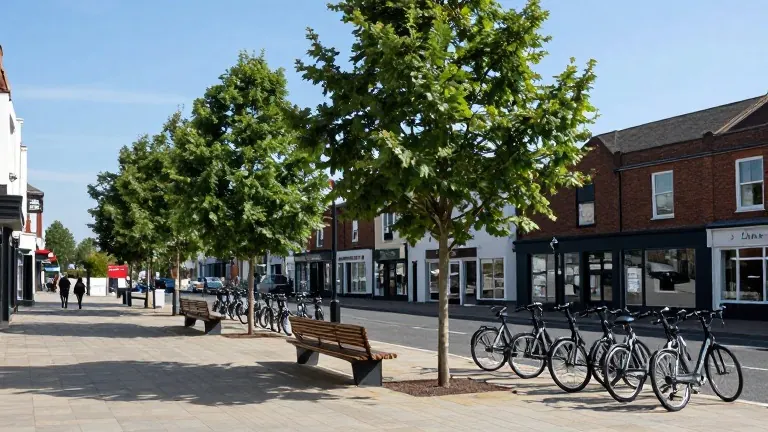
A new report from the urban thinktank Create Streets argues that the most effective way to revive declining UK high streets is not to spend heavily on buildings, but to cut costs by removing street clutter and repurposing parking spaces.
The study, produced in partnership with Cyclehoop, contends that current planning regulations favor conformity and treat speeding motor vehicles as the primary concern. It describes the typical high street as engineered for traffic rather than for people to linger, citing tarmac pavements, guardrails, and plastic planters as evidence of joyless public investment.
The report quantifies the economic impact of changing kerbside use. In a market town, a single parking space used by approximately 3.5 vehicles a day generates just over £73,000 in annual spending for nearby shops. If that same 12-square-metre area holds nine shared e-bikes, the space supports an average of 13 trips daily and generates over £146,000 in annual spending.
In busier city centers, the estimated annual spend from shared bikes rises to more than £300,000. Repurposing space for outside dining yields smaller gains but still adds about £120,000 in extra annual spending in urban areas.
The authors identify pedestrian guardrails as a major barrier to footfall, calling their removal the most cost-effective upgrade for most high streets. They argue that these barriers are eyesores with minimal safety benefits and that removing them allows families to feel safe letting go of children, a metric the report calls the indicator species of a healthy high street.
David Milner of Create Streets stated that streets appear ugly because the system counts maintenance liabilities rather than benefits. He noted that what works is cheap: trees in the ground, benches people want to sit on, and clutter taken away. The report cites Altrincham in Cheshire, where retail vacancies fell from over 30% to 7% in less than a decade after the creation of a car-free urban area.
Prime Minister Andy Burnham announced a £210m regeneration fund in September, though the bulk of the money is allocated for building renovations. A spokesperson for the Ministry of Housing, Communities and Local Government said the Hope on the High Street strategy supports local leaders in deciding on pedestrianisation based on community needs.
More Business · Bad Service · Report a business · Got a Story?