Analysis questions Oxfam methodology in Gaza environmental report
A detailed review of Oxfam's new report highlights significant gaps in data collection and legal reasoning regarding Israel's environmental impact on Gaza.
By Alexei Malhotra ·
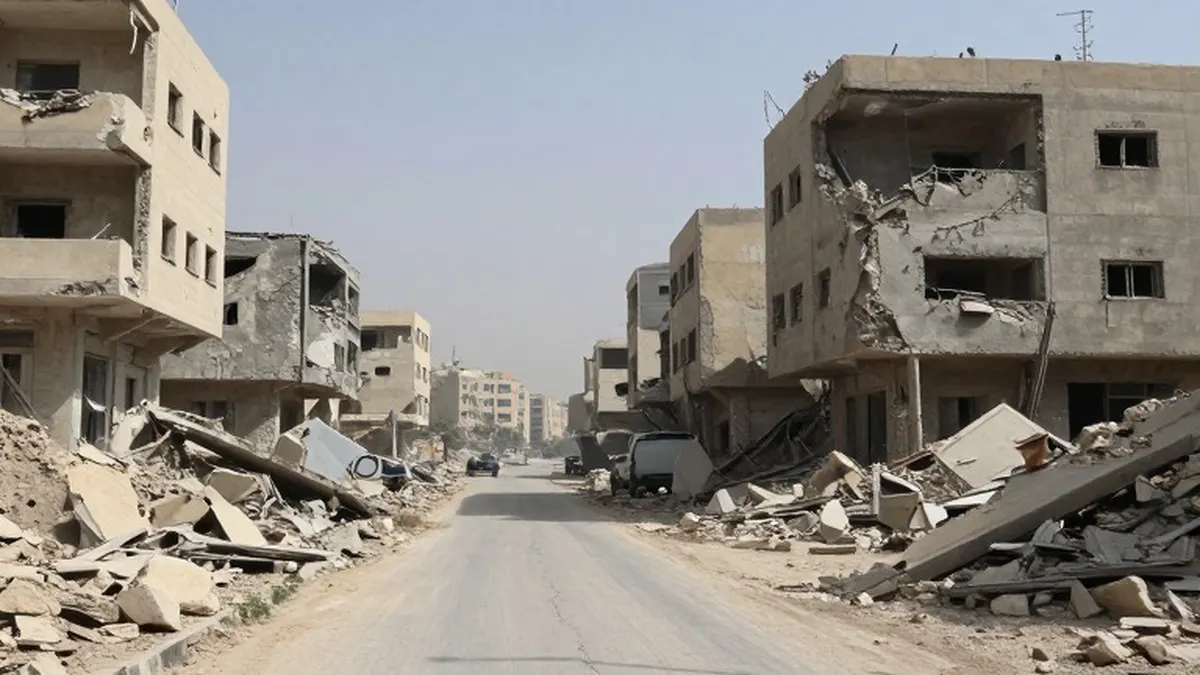
A new report by the anti-poverty charity Oxfam has accused Israel of committing environmental war crimes, claiming that military operations have transformed Gaza into a toxic wasteland that threatens human survival. However, a closer examination of the 125-page document reveals substantial gaps in its methodology and inconsistencies in how evidence is treated. The report relies heavily on secondary research, spatial analysis, and satellite imagery because no independent, field-based post-conflict environmental assessment of Gaza has yet been conducted. This lack of primary data means Oxfam cannot establish site-specific contamination levels with precision.
Israeli environmental scholar Prof. Alon Tal, who reviewed the report at the request of The Jerusalem Post, described Gaza's environmental situation as intolerable and in urgent need of attention. Nevertheless, he questioned the evidentiary basis for Oxfam's specific accusations against Israel. Tal noted that while the devastation is real and potentially catastrophic, determining the extent of damage is distinct from establishing the intentions of those responsible. The report often blurs the line between what can reasonably be inferred and what has been empirically established.
One of the most striking figures in the report is the claim that spatial analysis identified at least one potential contamination source across more than 99% of Gaza's territory. This figure is derived from dividing Gaza into 1,821 hexagonal grid cells of 500 meters each. If a relevant contamination source, such as a damaged facility or wastewater infrastructure, is identified within a cell, it is counted as present. Consequently, this represents a qualitative assessment of risk rather than a quantitative measurement of pollution. The report does not demonstrate that 99% of the land is contaminated with hazardous concentrations of toxic substances.
The report also maps munitions usage, treating each strike as a potential point source of contamination for soils and water. While the dispersal of heavy metals and explosive residues is a known phenomenon, Oxfam lacks sufficient physical sampling to quantify actual hazardous levels. To illustrate transboundary air pollution, the charity cites the 1999 Kosovo conflict and the war in Ukraine. However, it acknowledges that systematic air-quality monitoring in Gaza has not been possible. Israeli monitoring stations did record higher particulate matter levels in late 2023, but the United Nations Environment Program noted that factors unrelated to the war could have contributed to these increases.
Regarding water infrastructure, Oxfam states that all six of Gaza's wastewater treatment plants were destroyed by April 2024. It estimates that approximately 40,000 cubic meters of raw sewage are currently discharged into the Mediterranean Sea daily. While significant, this volume is lower than prewar estimates from the UN and the World Bank, which reported higher discharges of untreated or partially treated wastewater between 2012 and 2020. The report does not fully contextualize these current figures against the substantial preexisting contamination and operational issues that existed before the war began.
A notable omission in the report is the mention of Hamas, which is never named across its 125 pages. Documentation from Al Jazeera, Reuters, and The Washington Post has shown that Hamas repurposed water pipes for rocket production and maintained an extensive tunnel network. The report acknowledges that tunneling can affect groundwater but does not separately quantify the environmental consequences of these activities. Israel's Foreign Ministry criticized the report for trading credibility for campaigning, arguing that a serious account of the damage cannot ignore the role of Hamas's infrastructure and weapons depots.
The report's legal analysis cites Article 8(2)(b)(iv) of the Rome Statute, which requires environmental damage to be widespread, long-term, and severe to constitute a war crime. It also references the Genocide Convention, suggesting that the destruction of essential resources could form part of a genocide case. However, legal experts note that mapping potential contamination sources does not independently satisfy the cumulative requirements of these laws. There is also a fundamental distinction between damaged civilian infrastructure and unlawfully targeted infrastructure, which satellite imagery alone may not resolve.
Ultimately, while the report identifies genuine provisions of international law, its environmental evidence does not independently establish all necessary elements for violations. The reliance on potential contamination rather than demonstrated hazardous levels creates a gap between precautionary action and conclusive proof of specific health outcomes. The absence of a separate quantified assessment of other belligerents' activities further complicates the attribution of responsibility for the environmental degradation observed in Gaza.