Ophthalmologists Extract 11 Worms From Farmer's Eyes In South Korea
A 71-year-old man spent two months with parasites in his corneas before doctors removed the adults before they could release larvae.
By Claire Darwish ·
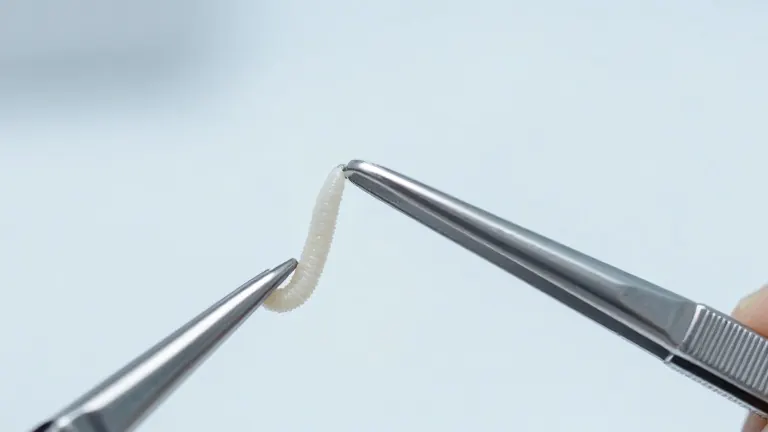
Ophthalmologists in South Korea removed eleven living nematodes from a patient's eyes, a case described in a report for the New England Journal of Medicine. The procedure prevented the parasites from releasing their larvae into the patient's visual field.
The patient, a 71-year-old crop farmer, reported a two-month history of discomfort, redness, and blurred vision in both eyes. He described the sensation as having foreign objects lodged in his eyes. Upon examination, doctors observed multiple mobile, whitish roundworms. The patient's conjunctiva showed enlarged blood vessels, and his corneal cells had eroded, likely due to the parasites' activity.
The medical team applied a topical numbing agent to the patient's eyes. They then used fine forceps to extract the worms individually. The doctors collected eleven adult specimens, each measuring between 11 and 22 millimeters in length. Microscopic analysis identified the parasites as Thelazia callipaeda nematodes.
These parasites are widespread across Asia and have established populations in parts of Europe. They primarily infest the eyes of cats and dogs, though they can inadvertently migrate into human eyes. At the time of extraction, many of the female worms were pregnant. The doctors noted that the patient avoided the immediate emergence of living larvae, which would have occurred had the worms remained for a longer period.
Source: Ars Technica