Rav Soloveitchik Celebrated Thanksgiving, Says Former Student
Rabbi Aharon Rakeffet-Rothkoff recounts the halachic giant's plain answer that there was no problem with observing the civic holiday.
By Alexei Malhotra ·
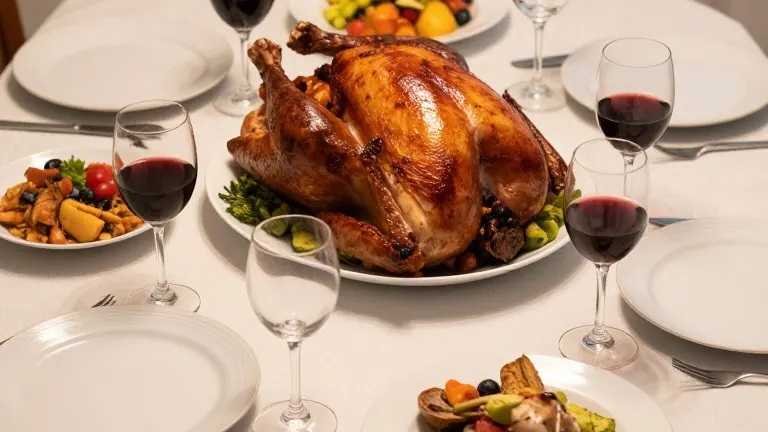
Rabbi Aharon Rakeffet-Rothkoff, a former student of the late Rav Joseph B. Soloveitchik, has publicly stated that the renowned halachic authority did not just permit Thanksgiving, but actively celebrated it. Rakeffet, who shared these memories in lectures on YUTorah and in print, said he asked the Rav directly about the holiday. The Rav did not hedge or offer complex legal theories. He answered plainly, "I see no problem with it. On the contrary, I celebrate Thanksgiving."
This testimony highlights a specific legal and philosophical position held by Orthodox scholars regarding the civic holiday. Rakeffet argues that Thanksgiving is not a religious observance but a practice of hakarat ha-tov, or gratitude, that fits comfortably within Jewish life. He notes that the holiday lacks a specific religious creed, worship service, or imitation of Christian liturgy. This distinction is central to avoiding the prohibition against imitating the customs of other faiths, or chukot ha'goyim.
Rabbi Yisroel Belsky, a prominent halachic authority, supported this view in his work Shulchan Halevi. According to Belsky, because Thanksgiving has no religious origin, there is no prohibition in celebrating it with a meal. The decision to observe the day, therefore, rests on a Jew's attitude rather than a strict legal requirement. For the majority of poskim, the issue is not whether one may eat the meal, but how one approaches it.
Rabbi Norman Lamm, a former dean of the Jewish Theological Seminary, articulated the value of this practice in a 1962 sermon at the Spanish-Portuguese Synagogue in New York. Lamm described the Thanksgiving services as an authentic expression of Judaism and a patriotic gesture. He argued that the holiday offers a corrective to national self-idolatry by forcing a reflection on human limitations without God. Lamm stated that this dual nature of gratitude and humility makes Thanksgiving more precious than other national holidays like Independence Day.
The article proposes that American Jews should embrace Thanksgiving as a civic mitzvah, a patriotic duty that reinforces their place in the nation. It suggests that in 2025, with antisemitism rising on both the political left and right, Jews should double down on their American identity. The piece advises families to use the day to articulate gratitude aloud, teach American Jewish history, and practice hospitality by inviting non-Jewish neighbors. It warns against letting the holiday become a prelude to Black Friday shopping or a rote ritual devoid of meaning.
The author argues that the current threat to Thanksgiving is not religious contamination but triviality. Gratitude has been smothered by screen time and consumerism, turning a day of civic reflection into a culinary event. To counter this, the article suggests focusing on five specific ideas during the meal: speaking about blessings, discussing the history of Jewish life in America, inviting guests, limiting consumerism, and addressing both the good and the difficult aspects of American life. The goal is to keep the holiday civic rather than religious, avoiding invented liturgies while engaging seriously with the shared American moment.