US President Trump endorses Iraqi oil crackdown
Washington supports Baghdad's move to seize control of Kurdish border crossings and oil fields, intensifying tensions with regional authorities and Iran-aligned groups.
By Claire Darwish ·
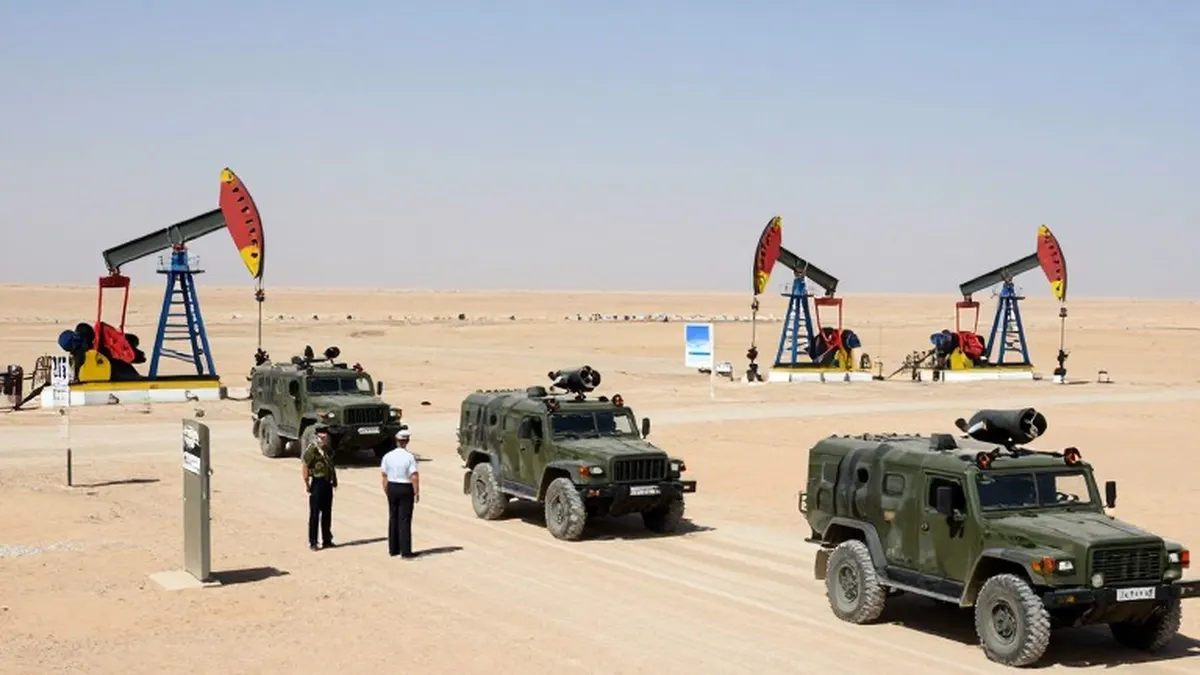
US President Donald Trump has publicly supported Iraqi Prime Minister Ali al-Zaidi's campaign to curb oil smuggling and strengthen central government authority. This endorsement places Baghdad in direct conflict with Kurdish regional leaders and militias aligned with Iran, marking a significant shift in the country's internal power dynamics.
In a post on Truth Social on Friday, Trump stated that the United States backs al-Zaidi's efforts to halt the illicit export of Iraqi crude, reduce corruption, and ensure that all weapons are under the exclusive control of the state. He expressed a desire for an Iraq that is united, prosperous, and strong, capable of making its own political decisions. This support comes at a time when al-Zaidi, who has moved Iraq closer to Washington, risks drawing the ire of both the Kurdish region and Tehran, according to Agence France-Presse.
Haider al-Aboudi, speaking to the Iraqi News Agency, explained that Baghdad defines crude exports that bypass the state marketer SOMO as smuggling because the revenue does not reach the national treasury. He estimated that Iraq lost approximately $100 billion to such practices in the Kurdish region of northern Iraq between 2008 and 2025. Reuters noted, however, that the methodology behind this specific calculation remains unclear.
The central government took decisive action on Tuesday by placing the Kurdish region's border crossings and several oil fields under federal control. By Thursday, Iraq had closed two key crossings, one with Syria and the other with Iran. Additionally, the country's highest court ruled on Wednesday that Baghdad has the authority to deploy federal forces along all international borders, including those within the semi-autonomous Kurdish region.
Oil Minister Basim Mohammed emphasized that the oil fields in the region and in Basra belong to all Iraqis and remain under the Iraqi flag. He warned that the government would not be lenient with any oil exported outside of legal frameworks, reinforcing the stance that all resources must be managed by the central state.
The Kurdistan Regional Government has responded with caution but firmness. Spokesman Peshawa Hawramani stated that while the region does not seek a clash with Baghdad, it views the central government's actions as a restriction of its semi-autonomous status and a violation of constitutional rights. He noted that accepting a lack of conflict does not mean accepting the violation of rights guaranteed by the constitution.
On Wednesday, the Kurdish government rejected what it described as military language and threats from the Iraqi military spokesman. It asserted that it is actively working with federal authorities to combat corruption. Tensions were further visible on the ground as thousands of Kurds protested the federal decisions on Thursday.
This escalation follows a similar move by al-Zaidi last week, when he ordered the army to prepare for an entry into Jurf al-Sakhar, south of Baghdad. The government accuses the Iran-backed Kataib Hezbollah of operating a smuggling ring in that area. Al Jazeera's Mahmoud Abdelwahed, reporting from Erbil, highlighted residents' fears for their livelihoods if Baghdad assumes control of the oil infrastructure. He described a significant trust deficiency between the two governments, noting that Kurdish leaders deny any illicit operations and view the campaign as an attempt to undermine their territorial and constitutional rights.
A meeting sponsored by the head of the Supreme Judicial Council is scheduled for December 1 in Baghdad. Analysts suggest that if this meeting fails to resolve the dispute, the parties could face a deeper constitutional and political conflict. Sajad Jiyad, an analyst at the Center for International Policy, told AFP that al-Zaidi's strategy aligns with American interests and Iran policy. He described the restriction of oil flows as a form of maximum pressure through economic blockade, a tactic consistent with current US policy.
Trump has previously welcomed al-Zaidi to the White House, where he praised the Iraqi leader as a great fighter and a great fan of America. This relationship underscores the close political alignment between the two leaders as they navigate the complex challenges of Iraqi sovereignty and regional stability.