US unveils new tariff strategy targeting China and global partners
The US has introduced new tariffs on 14 trading partners, including China, using a different legal basis after a Supreme Court ruling struck down previous measures.
By Thiago Cruz ·
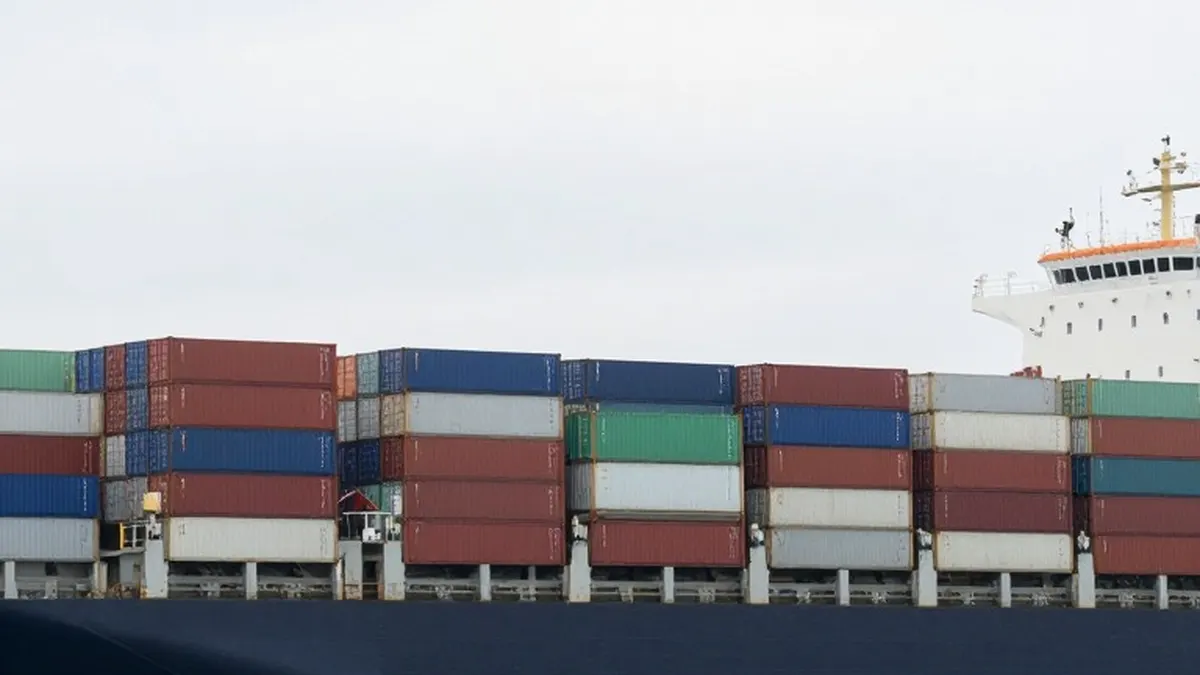
The United States has announced a new tariff regime targeting fourteen major trading partners, including China, the European Union, and India. This move comes just weeks after President Donald Trump held cordial meetings with Chinese President Xi Jinping, marking a shift in tone following recent diplomatic engagements.
The administration cited unfair government subsidies, suppressed wages, and structural excess capacity as the primary reasons for the new duties. China faces the highest rates under this framework, with a new 20 percent levy applied to its goods. This rate remains within the limits of the temporary trade truce agreed upon in October, which is set to expire in January.
This latest action represents the second attempt by the White House to reshape its trade policy after the Supreme Court declared the previous April tariffs illegal. To implement these new measures, the administration is utilizing Section 301 of the Trade Act of 1974. This legal tool allows for a broader range of activities to be subject to negotiation and potential penalties.
Alicia Garcia-Herrero, chief economist for Asia Pacific at Natixis, explained that the practical purpose is to rebuild the tariff leverage lost after the Supreme Court ruling. She noted that the goal is to force Beijing back to the negotiating table before the next major summit.
Beijing has responded by warning that it reserves the right to retaliate with steeper tariffs. A spokesperson for the Ministry of Commerce urged the US to correct its practices and return to dialogue. The Chinese government described the eight-month investigation into structural excess capacity as a unilateral act that disrupts the international economic order.
The new measures aim to extend the economic confrontation beyond bilateral trade with China. Washington is now targeting the industrial policies of other nations that serve as alternative manufacturing hubs but maintain close supply chain links with China. This approach seeks to hold these partners accountable for their engagement with Beijing.
Deborah Elms, head of trade policy at the Hinrich Foundation, observed that the purpose of the investigation has evolved. What began as a means to reapply previous tariff levels has become a more sweeping use of Section 301. She noted that the timing of the announcement adds a layer of tension ahead of the G20 Leaders Summit in Miami, where the two leaders are expected to meet next month.
Chen Bo, a senior research fellow at the National University of Singapore, suggested that the new tariffs are a substitute for the struck-down reciprocal tariffs. He argued that the US government needs the revenue to fund various activities, including its military operations in Iran, without relying heavily on the bond market or Congress.
Despite the ongoing tensions, both sides are working to mitigate conflicts before the upcoming summit. Discussions will likely cover broader issues such as artificial intelligence, nuclear weapons, and the wars in Iran and Ukraine. Chen Bo stated that these topics represent a much larger picture for both nations than their trade relationship alone.
While China’s global goods trade surplus reached a record $1.19 trillion last year, experts believe Beijing can blunt the impact of the new US measures. Garcia-Herrero noted that rare earths remain China’s sharpest tool in this confrontation. The risk for the US remains that higher prices will fall on American consumers, further straining the wider trade system.