Myanmar genocide ruling to test international law on Rohingya atrocities
The International Court of Justice is due to decide on Thursday whether Myanmar committed genocide against the Rohingya, with implications for survivors and other cases.
By Claire Darwish ·
The International Court of Justice will rule on Thursday morning on whether Myanmar committed genocide against its Rohingya minority, nearly a decade after a military campaign drove hundreds of thousands of people across the border. The judgment in The Hague could establish a major benchmark for how the gravest international crime is assessed.
Judges have considered the case for seven years, following accusations by the Gambia that Myanmar violated the 1948 UN genocide convention. The court has never held a state directly responsible for committing genocide. Two previous cases concerning atrocities in the Balkans did not reach that finding, although Serbia was held responsible for failing to prevent the genocide at Srebrenica. Establishing an intention to destroy a protected group, entirely or partly, has been a central difficulty in such proceedings.
Myanmar denies committing genocide and says its military operations were directed against an insurgent uprising. Rohingya communities had already faced decades of citizenship deprivation and growing discrimination, alongside communal violence involving Buddhists in western Rakhine state. After a Rohingya militant group launched attacks in the summer of 2017, the army undertook extensive operations that sent large numbers of Muslim Rohingya fleeing into Bangladesh.
Antonia Mulvey, founder of Legal Action Worldwide, which represents hundreds of survivors, said repeated patterns in the military's conduct demonstrated an effort to destroy the group. She described attacks involving assaults on civilians, burned villages, the separation of men and women, sexual violence and killings of people attempting to escape. Mulvey said the judgment's treatment of rape and other sexual violence would be particularly significant, arguing that accounts of mutilation supported the allegation of genocidal intent.
Survivors travelled from camps in Bangladesh to testify privately before the court in January. According to Legal Action Worldwide, one described her child being taken from her arms, stabbed and thrown into a fire. Another recalled bodies piled in a mass grave. Refugees interviewed by the Guardian in 2017 also described systematic killings in Tula Toli, including children being drowned. Satellite footage subsequently showed that the village had been destroyed.
A finding of genocide would increase international pressure on Myanmar's leader, Min Aung Hlaing, who commanded the military during the attacks in 2016 and 2017. He later ousted Aung San Suu Kyi's elected government in a 2021 coup that triggered a civil war, leaving tens of thousands dead. The International Criminal Court, which prosecutes individuals rather than states, is separately investigating him over alleged crimes against humanity. He became civilian president in April following elections widely condemned as a sham.
The decision could also indicate how judges might approach South Africa's genocide case against Israel over its campaign in Gaza. The Biden administration formally recognised the Rohingya atrocities as genocide. However, the Trump administration's UN ambassador, Mike Waltz, has warned against the ICJ establishing a genocide standard that could be applied to allied soldiers, while Washington has imposed sanctions on the ICC.
Supporters of the case want the judgment to prompt restrictions on weapons transfers and jet fuel supplies. The ICJ cannot enforce its own decisions, although previous rulings have been respected. The UN security council could support enforcement, but divisions, particularly between the United States and China, make that unlikely.
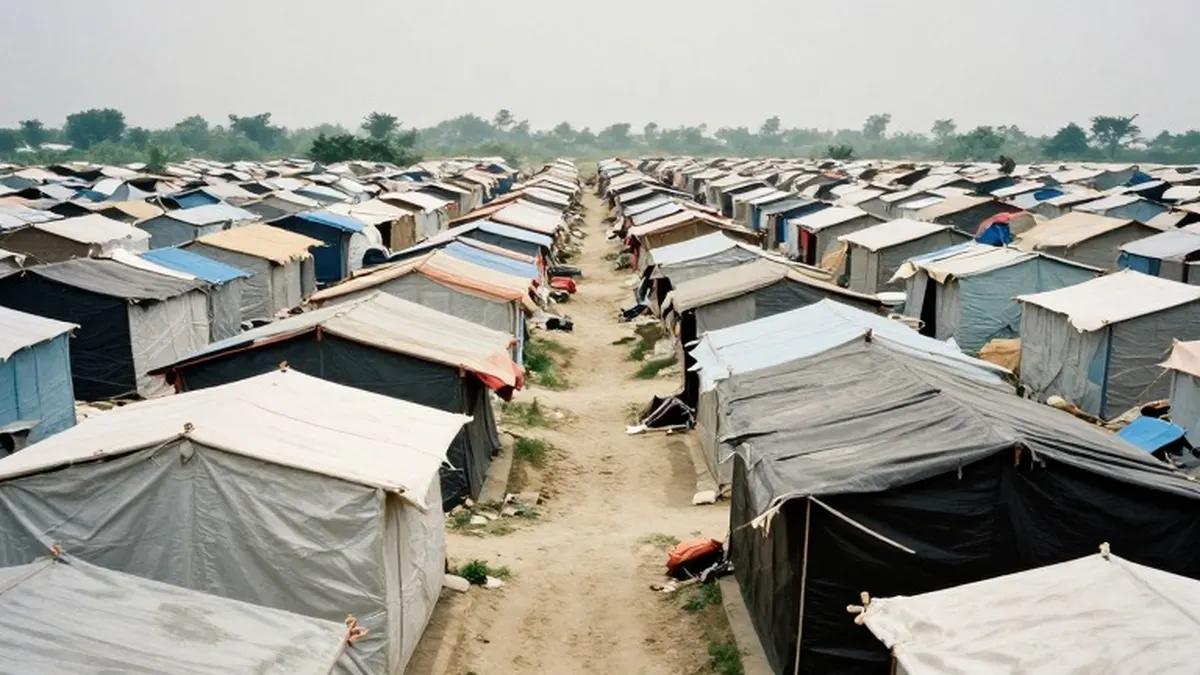
More than 1 million Rohingya remain in Bangladesh in the world's largest refugee settlement, while fewer than 600,000 are estimated to remain in Myanmar. Former UN rights investigator Yanghee Lee said the ruling offered an opportunity to secure justice after the international community failed to prevent the atrocities. A displaced Rohingya man in Myanmar told the Guardian he hoped it would help end longstanding persecution and bring equal rights and safety for future generations.