Americans to spend $13.5 billion on Halloween despite Scottish origins
While the holiday traces back to the Celtic festival of Samhain, U.S. commercial infrastructure has driven spending to three times that of Britain.
By Alexei Malhotra ·
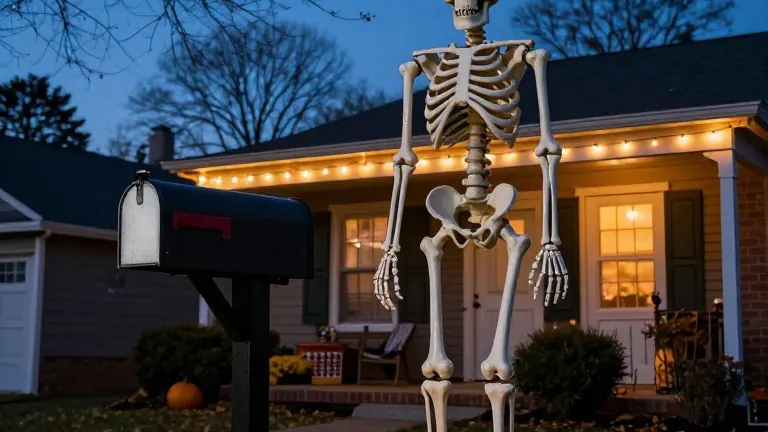
Americans are preparing to spend $13.5 billion on Halloween this year, a figure that dwarfs the $940 million projected for the United Kingdom. The U.S. outspending rivals a cultural paradox: the holiday with the deepest roots in British and Celtic history is now a far larger commercial event across the Atlantic. National Retail Federation data shows that the American celebration has evolved into a massive retail opportunity that far outpaces its European counterparts.
The modern celebration originates from Samhain, an ancient festival held by the Celts more than 2,000 years ago. This culture inhabited Scotland, Ireland, Wales, and northern France. Samhain marked the end of the harvest season and the beginning of the darker half of the year. Celebrations typically occurred between October 31 and November 1. Ancient believers held that the boundary between the living and the dead was at its thinnest during this period, allowing spirits to roam the earth.
Victoria Millar, curator at the Ulster Folk Museum in Northern Ireland, notes that archives contain many stories from this era. She describes how people wore masks, lit fires, and shared tales of ghosts and fairies to protect their households. To ward off evil spirits and attract good ones, communities lit massive bonfires. They also consumed harvest fruits that would not last the winter, often baking barmbrack, a bread containing dried fruit and hidden charms like rings or coins to predict the future.
The tradition of dressing up in costumes to hide from evil spirits also dates to this early Celtic period. However, the specific custom of dressing as witches emerged much later, following the European witchcraft craze of the 17th century. During that time, thousands of women accused of witchcraft were executed. Trick-or-treating also has Celtic roots. People would dress as evil spirits and go door to door, begging for food and threatening to curse households that refused to give.
Francis Blessington, a professor of 17th-century English literature at Northeastern University, explains that people did anything to appease the dead. As the Roman Empire expanded, Samhain began to incorporate Roman festivals like Feralia. Later, Christianity aligned these older customs with Allhallowtide, a three-day Catholic observance from October 31 to November 2. This period included All Hallows' Eve, All Hallows' Day, and All Souls' Day.
In Britain, the 16th-century Reformation pushed All Hallows' customs to the margins. Bonfire Night, which commemorates the 1605 Gunpowder Plot, became the primary autumn fire festival. It was not until the 19th century that Irish and Scottish immigrants brought many of these customs to North America. They adapted traditions to suit their new environment, such as carving pumpkins instead of turnips for jack-o-lanterns. This practice stems from an Irish myth about a man named Stingy Jack.
Koen Pauwels, a Distinguished Professor of Marketing at Northeastern University, attributes the disparity in spending to marketing infrastructure and social meaning. He notes that Halloween is a holiday with no religious obligations or required gifts. This lack of structure allows for pure participation and self-expression. Americans have extended the celebration to adults, pets, and home decor, creating a commercial ecosystem that sits between back-to-school and Christmas in the retail calendar.
The growth of Halloween in the U.S. accelerated during the mid-20th century. In the 1930s and 1950s, towns organized trick-or-treating to reduce vandalism. Postwar suburbs, with their walkable streets and front porches, made the ritual a neighborhood standard. The holiday eventually became a dominant force in pop culture, further boosted by American films and television in the 1980s.
Halloween has since returned to Britain largely as an American import. Young consumers in the U.K. now favor it over Guy Fawkes Night, driving a steep increase in spending. However, Pauwels points out that one American custom has not fully taken hold in Britain: the practice of competing with neighbors through elaborate lawn decorations. He describes the image of a 12-foot skeleton on the lawn as a distinctly American phenomenon.
Source: Northeastern Global News