French Retailers: Iranian Hackers Spoiled Food at 700 Stores
Paris accuses a Revolutionary Guard cyber unit of turning up temperatures in supermarkets and butcheries, marking the first formal attribution of the recent wave of refrigeration attacks.
By Thiago Cruz ·
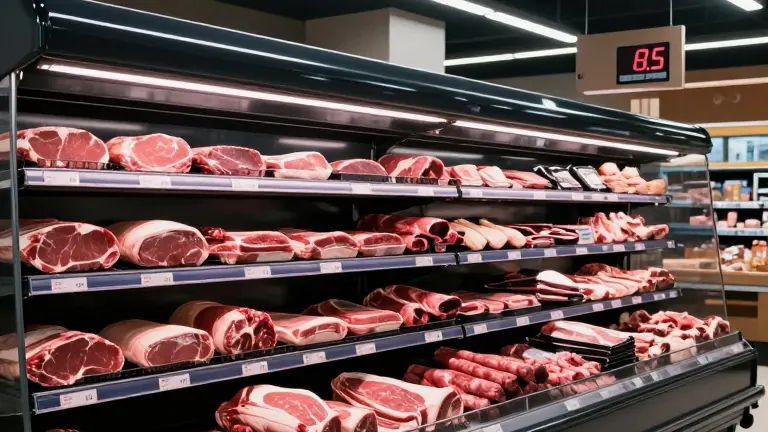
French shoppers faced spoiled meat and dairy after Iranian hackers manipulated refrigeration systems at approximately 700 retail locations during October. The French National Cybersecurity Agency (ANSSI) confirmed that attackers accessed industrial controllers in supermarkets and butcher shops, raising temperatures overnight and damaging millions of dollars' worth of inventory. The agency also identified targets at several small hydroelectric plants, which suffered moderate operational effects.
The incident follows a series of similar disruptions across the globe in 2026. Grocery stores in Sweden and Ireland reported compromised refrigeration units last week. In France, staff at a major blood bank recently had to manually move samples to prevent spoilage after their cooling systems failed. Earlier this year, suspected Iranian actors attacked an Israeli food processing plant, while U.S. military commissaries experienced overnight temperature spikes in the summer.
France has become the first nation to officially assign blame for this specific campaign of cyber sabotage. ANSSI traced the attack to the Shahid Kaveh unit, a cyber branch of Iran's Islamic Revolutionary Guard Corps. Investigators identified the group through digital infrastructure clues, a link to a propaganda outlet, and Farsi language traces in the code. The Paris Prosecutor's Office has opened a criminal investigation and requested international arrest warrants for the unit.
French Foreign Minister Jean-Noël Barrot described the campaign as a major attack on national interests. He stated that the operation marks the first large-scale cyberattack aimed at physical sabotage on French soil. While the U.S. Department of Defense has not yet confirmed the origin of the summer attacks on military bases, Secretary of State Marco Rubio commented on the French findings during the G7 meeting in Paris on Monday.
Rubio declined to specify whether the United States shared information with France to aid the attribution process. He noted that France is capable of such assessments and expressed surprise that Iran would target a country not directly involved in the ongoing war with Tehran. He described the tactic of attacking refrigerators as a strange choice for the adversaries.
Cybersecurity experts note that these attacks exploit vulnerabilities in operational technology. These industrial machines, which control physical processes like cooling and pumping, are often older and difficult to patch without halting service. Many remain connected to the open internet to allow for remote vendor maintenance. The French government’s formal accusation may prompt other affected nations to review their own incidents.
Iran has not yet responded to the French government's claims. The next major step in the investigation is the potential issuance of international arrest warrants by the Paris prosecutor, a move that could formalize the diplomatic and legal confrontation between Paris and Tehran.