Lebanon's Christian Villages Face Strategic Pressure Under Israeli Occupation
Experts say Israel is using Christian villages in southern Lebanon to fragment the population, a strategy highlighted by a recent military video that drew local condemnation.
By Claire Darwish ·
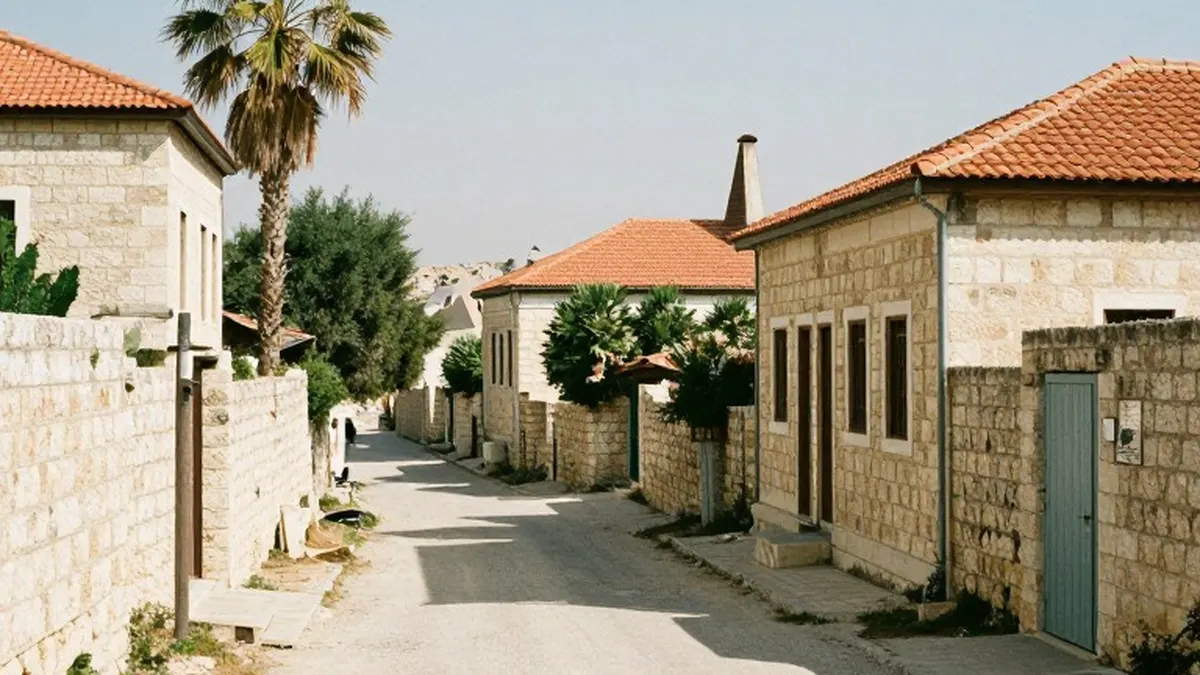
On Lebanon's Independence Day, the Israeli military's Arabic-language spokesperson, Ella Waweya, shared a video from a classroom in Dibil, a Christian village in southern Lebanon. In the clip, she wished Lebanese citizens a happy national day, praised the iconic singer Fairuz, and attributed the region's hardships to Hezbollah. The post sparked widespread condemnation from local officials, with Dibil's municipality revealing that the visit occurred approximately one month prior and was conducted without prior coordination with school administrators. The Israeli military stated that an investigation is underway to determine if Waweya had official approval for the release.
Unlike neighboring Shia Muslim villages, Christian communities in the south have generally been permitted to remain on their lands during the ongoing conflict. However, residents describe their existence as living within a giant prison. Ayoub Khreish, president of the Ain Ebl municipality, explained that movement is strictly limited. To travel to Beirut or beyond, residents must navigate a complex mechanism where requests are submitted to the Lebanese Army, passed to the United Nations, and finally approved by Israeli authorities.
Israel launched a massive assault on Lebanon in October 2023, following the start of the war in Gaza. According to Lebanon's Ministry of Public Health, approximately 9,000 people have been killed since the conflict began. While southern Lebanon has suffered the most severe damage, with thousands of air raids and demolitions rendering much of the area uninhabitable, Christians have also faced displacement and casualties. In early November, mayors of five Christian villages appealed to the Council of Catholic Patriarchs and Bishops of Lebanon, urging for support to ensure residents could stay with dignity and security rather than in uncertainty.
The political landscape remains tense as a framework agreement reached in June, which aimed for an Israeli troop withdrawal and Hezbollah disarmament, has stalled. Talks have been paused since August, leaving local leaders feeling that a political solution is farther away than anticipated. Khreish noted that while he initially hoped for a swift resolution, the reality is that the community is now operating under the direct authority of the Israeli military. Soldiers enter the village regularly, and locals report that their initial fear has given way to a sense of living under military governance.
Experts argue that the specific treatment of Christians in southern Lebanon is part of a broader strategy to fragment the local population. Munira Khayyat, author of Landscape of War, described this as a longstanding divide and conquer tactic. She noted that Israel has historically sought to separate Christians from their social and historical environment, a strategy also evident in Palestine. This approach aims to reinvent minority groups as allies, potentially serving as foot soldiers for the Zionist cause.
In July, Prime Minister Benjamin Netanyahu claimed that some Lebanese Christians had asked to be annexed by Israel for protection against Hezbollah. He made these remarks during an interview with Fox News, suggesting that Israel protects Christians everywhere. Lebanese officials, including Hanna al-Amil of the Rmeish Municipality, rejected these claims. A statement signed by 15 southern villages called the assertion completely fabricated and unrelated to reality, emphasizing that the villages had not formally requested annexation.
Michael Young, a political analyst at the Carnegie Center in Beirut, suggested that Israel aims to project an image of protecting minorities to the outside world, particularly the United States. This public relations effort is seen as a response to the backlash against Israel's actions in Gaza, where Christian churches were bombed. Young highlighted that figures in US media have amplified this narrative, helping Israel present itself as friendly to various minority groups, including Druze and Christians.
Beyond external image management, experts point to a more sinister internal policy of fragmentation. Young referenced a paper by Tamir Hayman, a former head of Israeli military intelligence, which outlines a view that Arab states are collections of tribes rather than cohesive nation-states. According to Hayman, undermining the stability of these states is a natural process that Israel can manage more effectively than contending with strong, unified nations. This perspective suggests that encouraging division is a strategic goal rather than an accidental outcome.
Despite the strategic pressures, many Lebanese Christians remain deeply connected to their Shia neighbors. Residents are shocked by the destruction in surrounding Shia villages and find it inconceivable to live without them. Khreish expressed that while there is anger toward Hezbollah, criticizing the group does not automatically align residents with Israel. The community feels stuck in limbo, living day by day with constant anxiety about travel and the future, hoping only for peace and an end to the war.