Long Island schools buy AI tools while debates continue
Dozens of districts have purchased platforms like Magic School AI and Brisk Teaching, but usage among teachers remains low.
By Alexei Malhotra ·
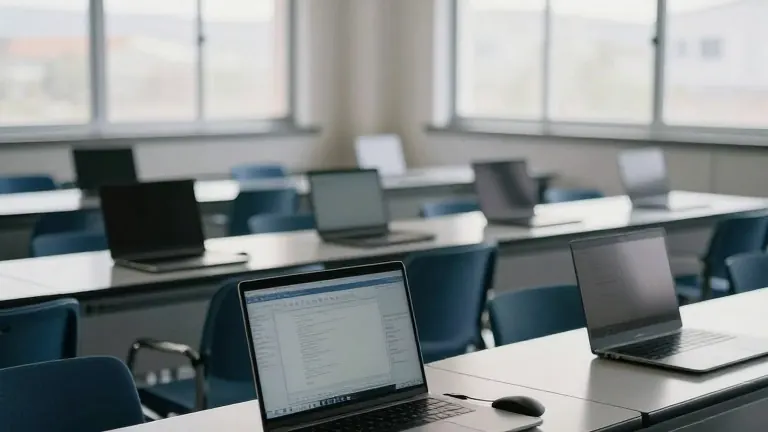
Long Island school districts are spending tens of thousands of dollars on artificial intelligence platforms, but most teachers are not using them regularly. While the technology is being integrated into classrooms, district leaders and labor unions are still working out the rules for how these tools will affect daily instruction and student data.
Magic School AI Vice President Sarah Marr stated that 38 school districts across Nassau and Suffolk counties have purchased their products. That total includes 23 districts in Nassau and 15 in Suffolk. This represents 41% of all districts in Nassau and 30% of the island's total districts. Marr noted that Long Island has the highest concentration of their users in the state.
Brisk Teaching CEO Arman Jaffer said his company serves more than 1,000 districts nationwide. He did not provide a specific count for Long Island, but named Jericho, Merrick, Rockville Centre, Uniondale, and Wantagh as local users. Both companies use large language models like Claude, Gemini, and OpenAI to power their tools. They recommend that teachers receive training before students begin using the platforms.
Teachers can use these platforms to generate lesson plans and create limited-time chatbot sessions for students. Rebecca Chowske, an assistant superintendent in Manhasset, said she felt comfortable using the tools because the system tracks history and monitors student activity. This allows staff to see exactly what is happening in the classroom.
The platforms also allow students to interact with AI versions of book characters. Marr gave the example of a student talking to an AI version of Scout from To Kill a Mockingbird. She said this can help reluctant readers engage with the material by asking questions about plot or character development in real time.
Usage data shows a gap between purchasing and daily application. In Jericho, only 223 of 808 teachers used Brisk during the 2025/26 school year, and just 115 used it more than ten times. In Wantagh, 85 of 155 teachers used the tool, with 54 using it more than ten times. Pricing usually ranges from $4 to $6 per student. Levittown spends $39,000 on Magic School AI, which is a small portion of its $280 million budget.
New York State United Teachers has called for limits on student-facing AI. Kevin Toolan, a math teacher and union board member, opposed chatbots for social and emotional learning. He asked if a computer should teach sounds or if that should be done by a human. He also worried that new technology could be used to justify larger class sizes. Some schools, like Syosset, are skipping specialized platforms and licensing base models like Gemini for about $31,000.
Source: Long Island Press