Hunger Strike Enters 18th Day at Jamia Millia Islamia Over Long-Suspended Students' Union
A law student at the New Delhi university has been fasting since October 12 to demand the return of an elected students' union, which has been suspended for 20 years.
By Claire Darwish ·
Ebin Basil, a 23-year-old third-year law student at Jamia Millia Islamia in New Delhi, is on the 18th day of an indefinite hunger strike. He has been fasting since October 12, calling for the restoration of the students' union at the prominent Muslim university, which has been suspended for the past 20 years.
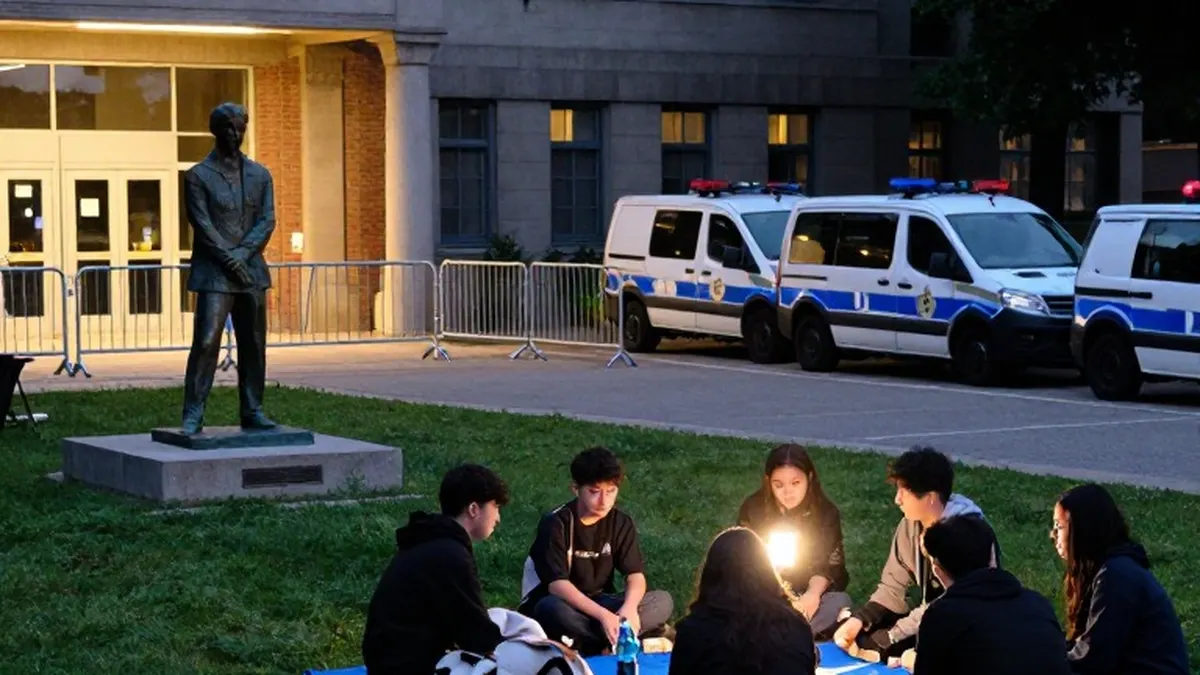
Lying on a mat in the political science department building and surrounded by friends and supporters, Basil told Al Jazeera he is determined to continue. "Till my last breath, I will be fighting," he said. He is one of five hunger strikers at the center of a protest that has drawn hundreds of students to the grounds near a statue of the poet Mirza Ghalib, close to the main entrance. Several others who started the fast have withdrawn over health concerns.
The protest began this month with night vigils and demands for a union election. On October 16, the university suspended Basil for a year and banned two other hunger strikers from campus. By the night of October 17, nearly 200 protesters had returned to the grounds. On October 24, the gates were barricaded, classes moved online, and students in residence halls were pressured to leave. Armed police and paramilitary forces were posted outside, and gatherings of more than four people were banned on campus.
On Monday, the administration said elections would be held within 15 days of approval of a draft union constitution, to be prepared under University Grants Commission guidelines. A committee has until December 20 to produce the draft, but no deadline has been set for approving it. Students rejected the offer as "too slow", and Basil called it "a very vague point".
Jamia's history with student democracy has been uneven. Founded in 1920, it gained federal university status in 1988. Its first union election took place in 1981, and elections stopped in 1997 amid unrest before resuming in 2005. That union was dissolved the next year, with the administration citing an alleged attack on the vice-chancellor. A 2011 high court petition and a 2017 student hunger strike failed to revive it, though department-level bodies were later allowed.
Basil has lost 7kg and can barely walk unaided, with blood tests showing low sodium and glucose levels. Students say an elected union would give them a voice on hostel conditions, canteens, fee increases and limits on joining youth-led antigovernment protests. Protester Mantasha Irfan, of the All India Students' Association, said supplies to the protesters had been cut, with one working toilet, no water or electricity, and no sanitary pads allowed in. Another student, M K Nausheen Farook, said she does not trust the administration and alleged women in residence halls were being pressured to leave.
The issue extends beyond Jamia. At Aligarh Muslim University, a 19-day hunger strike preceded an announcement that union elections will be held on November 5, eight years after its last union was formed. Jawaharlal Nehru University and Delhi University, by contrast, elect student bodies every year. Delhi University professor Apoorvanand said authorities are unwilling to encourage independent thinking or the emergence of Muslim leaders, and that students feel suffocated by the "erosion of democratic spaces".
Jamia spokeswoman Saima Saeed said the administration is "the first in 20 years" to accept the demand for a union. She said the proposed constitution requires careful review of court orders, government recommendations and university statutes. The university is closed until January 13, and some students are caught in the middle. Hera Sarfaraz, a first-year MBA student, said ordinary students want the dispute settled amicably so in-person classes can resume.
Source: Al Jazeera