Seven Cafes in Iran Sealed Over Religious Norms Complaints
Police and prosecutors in two provinces closed businesses citing violations of Islamic principles, while legal advocates argue the closures lack specific statutory backing.
By Thiago Cruz ·
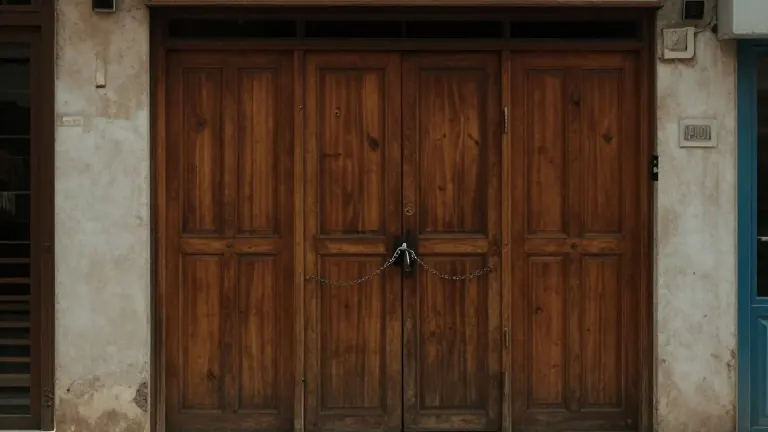
Authorities in Iran closed seven dining establishments across two provinces this week, citing failures to adhere to Islamic norms. The closures occurred in Gilan and South Khorasan, with police and prosecutorial offices acting independently in each region. Legal experts and local residents have raised questions about the specific rules broken, as officials provided broad justifications rather than itemized violations.
In Fuman, a city within Gilan province, police sealed four cafe-restaurants on Sunday. Hossein Ashouri, the police chief for Fuman, told the Mehr News Agency that managers were referred to judicial authorities to start legal proceedings. Ashouri did not specify the exact infractions. In the past, similar closures in Iran have resulted from issues such as mixed seating for men and women, women not wearing head coverings, or the playing of music.
Simultaneously, in the city of Birjand in South Khorasan province, prosecutors sealed three cafes. Ahmad Ghasemi, the provincial prosecutor-general, announced the closures via the Tasnim News Agency. Ghasemi stated that the actions followed public complaints regarding a failure to observe Islamic principles and regulations on public decency. He indicated that legal action would proceed against the establishments and that violations would be handled without leniency.
The legal advocacy network Dadbaan has challenged both sets of closures. The group argues that Article 28 of the Constitution guarantees the right to employment. Dadbaan stated that any restriction on this right must be grounded in specific laws, not general references to religious norms. They further noted that the Law on the Guild System requires a specific violation and adherence to legal procedures before a business can be closed. The network maintains that a general citation of failure to observe Islamic norms is insufficient to justify depriving citizens of economic activity.
In Fuman, the managers of the four sealed cafes are now in the judicial process. In Birjand, the prosecutor-general described the protection of public rights and religious values as core duties of the authorities. Ghasemi said public complaints in the area are examined and pursued within the legal framework. He added that no establishment may disregard laws in a way that creates conditions for behavior contrary to public decency.
The closures reflect a multi-layered approach by Iranian authorities to enforce social standards in the public sector. Police forces in Gilan and prosecutorial offices in South Khorasan acted on separate complaints. The involvement of different government branches in the two provinces underscores the active enforcement of religious standards in commercial spaces.
Legal experts are monitoring the cases to ensure enforcement aligns with constitutional protections for economic activity. The outcome of the judicial proceedings for the managers in Fuman and Birjand will likely set a precedent for similar cases. For now, the seven businesses remain sealed while legal processes unfold in both provinces.