Recordings raise questions over train clearance before deadly Spain crash
Audio exchanges suggest controllers knew a train remained stopped as another approached before a collision that killed at least 69 people.
By Alexei Malhotra ·
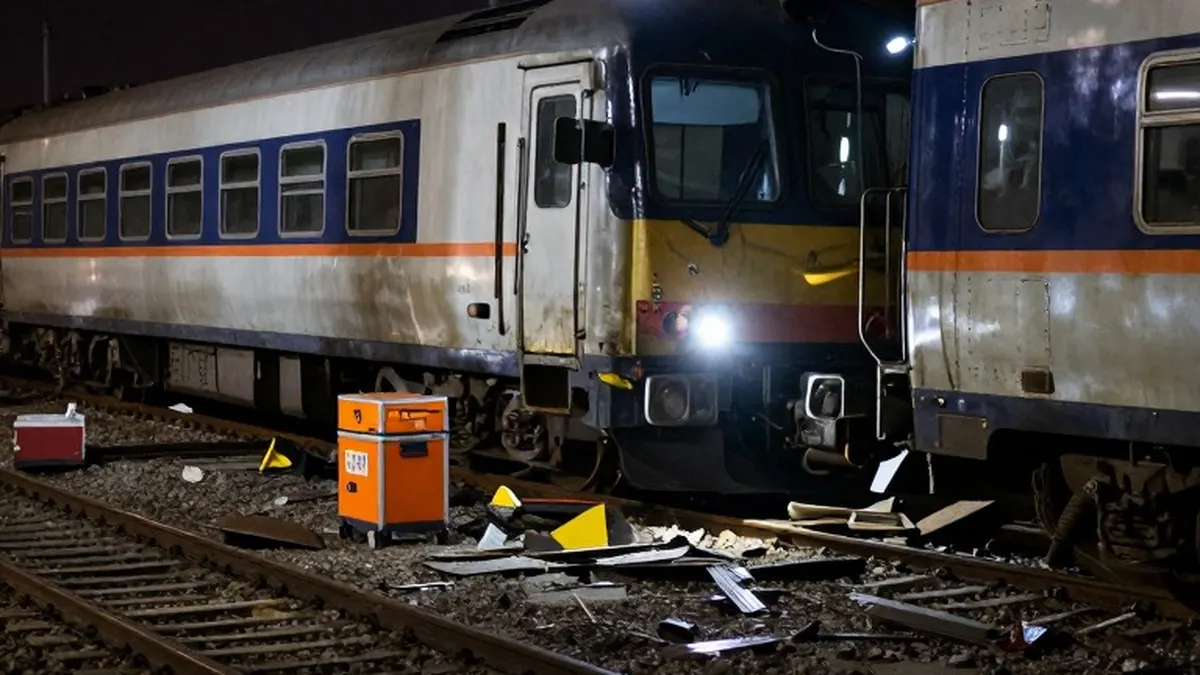
Recordings released by Spanish media have raised questions about instructions given to train drivers before Wednesday morning's collision in Spain, which killed at least 69 people and injured dozens. Investigators are examining why a train travelling from Madrid to Seville crashed into another that was stationary, as the country begins three days of national mourning.
The three recordings, published by outlets including El Pais and RTVE, appear to indicate that a high-speed train received permission to proceed while another was stopped roughly 25km ahead. The approaching service, operated by state-owned Renfe, carried 397 passengers. The stationary train, operated by private company Iryo, had 147 passengers aboard. A reported computer failure affecting automatic signalling had brought trains on the stretch to a halt.
In one exchange, a Madrid control centre operator instructed the Renfe driver to continue at normal speed using Lateral Signalling Block, an alternative system used when automatic signalling or data transmission fails. The driver questioned whether normal speed was intended, and the controller confirmed it. Transport Minister Óscar Puente said the Renfe service had been instructed to proceed in error and described the decision to restart trains without speed restrictions as inexplicable.
Separate recordings capture the Iryo driver reporting a loss of communication with the train-control system and saying the train was stopped before the entry signal at Urda. After being told to resume the journey normally, the driver contacted the control centre again to explain that the train could not restart. That later exchange suggests the controller had been informed that the Iryo service remained stationary while the Renfe train approached. Iryo said its train was hit from behind.
Emergency teams continued searching overnight, using powerful floodlights as they cut into damaged carriages. Spain's interior ministry said hundreds of personnel were assisting the recovery operation, with drones and helicopters supporting efforts to locate victims and clear rubble. Witnesses reported passengers bleeding and crying, others trapped in seats, and smoke filling carriages. One carriage caught fire.
Many victims had yet to be identified, and relatives were still seeking information late on Wednesday. The Civil Guard established offices in Madrid, Toledo, Seville and Córdoba to investigate missing-person reports, prioritising identification and DNA collection. Residents held a vigil and observed a minute's silence in Toledo, near the crash site. European Union flags were lowered to half-mast in Brussels during Spain's mourning period.
Prime Minister Pedro Sánchez expressed grief and called it unacceptable that Spain had experienced two serious railway disasters this year. A January high-speed crash near Córdoba killed 46 people on the same line, farther south. Wednesday's collision was Spain's deadliest since the 2013 crash near Santiago de Compostela that killed 80 people.
Most political parties halted election campaigning, but Vox leader Santiago Abascal said his party would continue, rejecting what he characterised as attempts to use mourning to suppress criticism of rail infrastructure. Broadcaster TVE reported that around 1,500 people gathered outside the Transport Ministry overnight, largely demanding the resignations of Sánchez and Puente. Police dispersed protesters with tear gas after bottles and flares were thrown. No injuries or arrests were reported.
Rail drivers were expected to proceed with a planned Thursday strike, which their union, Semaf, said would defend railway safety. Opposition People's Party leader Alberto Núñez Feijóo called for answers about the country's infrastructure.
Source: BBC News