Record 33 Members Expelled From China's Communist Party as Plenum Draws Lowest Attendance Under Xi
The party's fifth plenum ended with a record number of expulsions, including 16 military figures, and the emptiest rows of seats of Xi Jinping's leadership.
By Claire Darwish ·
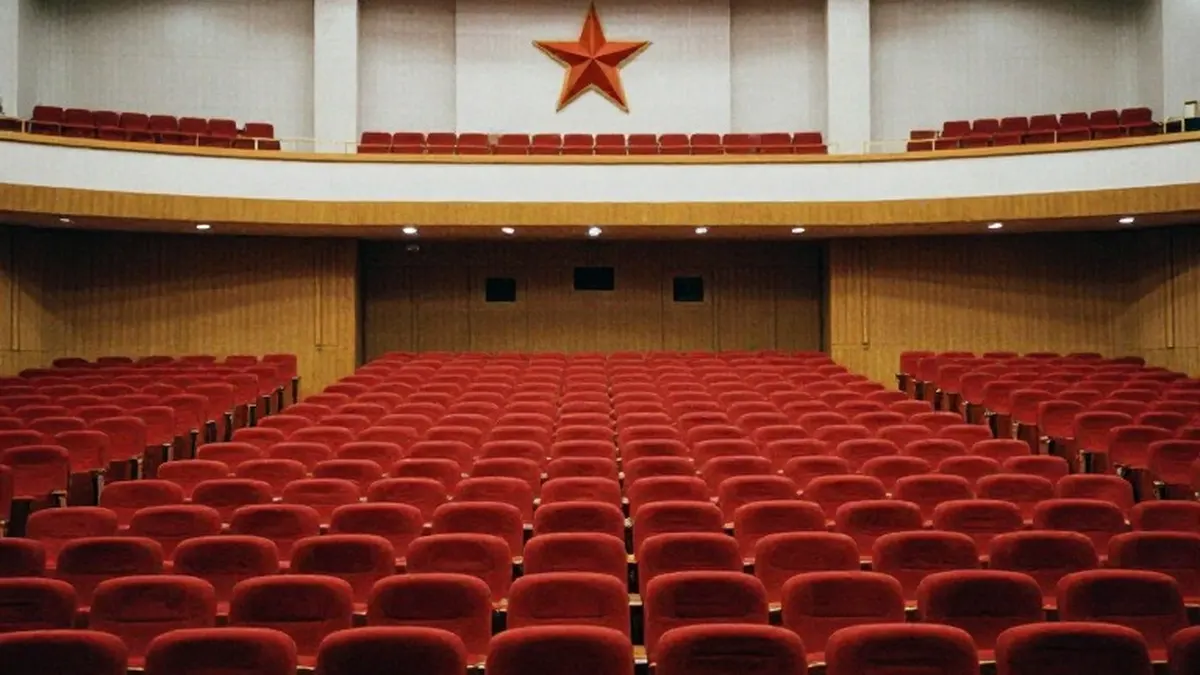
China's Communist Party has expelled a record 33 members as it wrapped up its annual major political gathering, which also recorded the lowest attendance seen under Xi Jinping.
Only 279 Central Committee members took part in the fifth plenum, down from 315 at the fourth plenum in October 2025 and 364 at the third in July 2024. It is the first time in Xi's 14 years in power that attendance has dropped below 300. The current Central Committee began its term in 2022 with more than 370 members.
A communique issued on Thursday, marking the end of the four-day closed-door meeting at a Beijing hotel, said 16 of the 33 expelled members come from the military. The document did not say what specific charges they face beyond "serious disciplinary and legal violations", a broad formula that has become routine in Xi's anti-corruption campaign.
Recent plenums centred on economic reforms or social and development matters, but this week's meeting put party discipline at the forefront. Xi has treated the fight against corruption as a pillar of his rule since taking power in 2012, calling it the "biggest threat" to the party. The latest expulsions lift the number of members removed during his third term to a record 51, compared with 34 in his first term and five in his second. The party's top anti-corruption watchdog also reported that 680,000 people across the party apparatus were disciplined in the first nine months of this year.
Among the senior figures expelled are Ma Xingrui, a former Xinjiang party chief, and the former top generals Zhang Youxia and Liu Zhenli. Official announcements this year said they had seriously violated party discipline and rules, wording widely read as a euphemism for corruption. Former diplomat Liu Jianchao, who vanished from public view in July last year, was also named among those purged.
Zhang Youxia was vice-chairman of the Central Military Commission, which controls the armed forces. The seven-member body has since shrunk to two: Xi as chairman and Zhang Shengmin as vice-chairman. Analysts at the Asia Society Policy Institute, Neil Thomas, Lobsang Tsering and Shengyu Wang, described the removal of the military's top brass as "in a category of its own", saying it raises "serious questions about organisational leadership and combat readiness".
The party's 24-member Politburo was at one point reduced to 21 after the removals of Ma, Zhang Youxia and former general He Weidong in 2025. Zhang Shengmin was promoted to the body at the fifth plenum, bringing it to 22.
In its statement, the party said it had "squarely confronted the grim reality" that its leadership had at times been weakened or hollowed out, and pledged to enforce strict self-governance. Chong Ja Ian, a non-resident scholar with Carnegie China, said the campaign has become "an effort to consolidate and maintain authority" that will expand depending on how secure Xi feels. He added that Xi's ability to remove people he promoted with little opposition shows how unassailable his position is. In January, Xi warned against "two-faced cadres" who profess loyalty but defy orders and pursue their own interests.
Many analysts link the emphasis on discipline, often interpreted as loyalty, to the Party Congress due in 2027, when a leadership reshuffle is expected. Many expect Xi to keep the top job for a fourth term and beyond, which no leader has done except Mao Zedong. Thomas said Xi has reason to scrutinise the next cohort more closely given the fall of so many current committee members, and suggested provincial leadership ranks as a promising place to look for rising stars.
Source: BBC News