Supreme Court to Rule on Federal Officer Liability
A case involving a prisoner's fractured tail bone tests the limits of the Bivens doctrine as immigration complaints rise.
By Claire Darwish ·
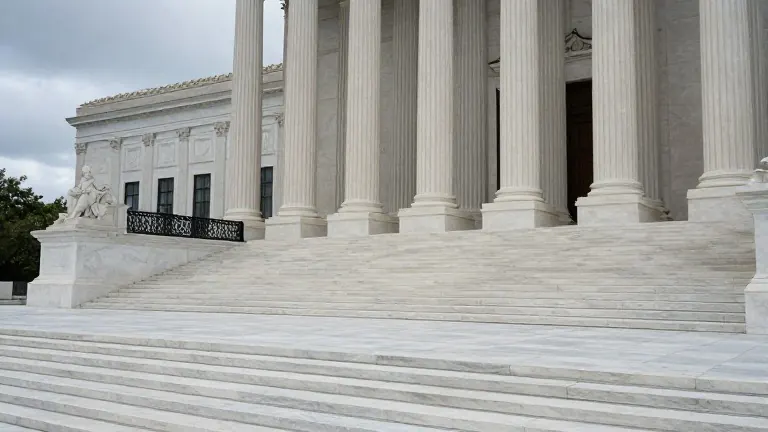
The Supreme Court will hear arguments on Monday regarding whether federal law enforcement officers can be sued personally for violating constitutional rights. The case, known as Watanabe v. United States, centers on a dispute that began inside a federal prison in Hawaii five years ago.
Kekai Watanabe, now 40, was beaten with a makeshift weapon during a gang riot in 2021. He reported serious back pain to a nurse, who told him to stop being a cry baby. Doctors diagnosed him with a fractured tail bone seven months later. He sued the nurse for violating his Eighth Amendment right against cruel and unusual punishment.
Legal scholars say the outcome will extend beyond prison walls. The ruling could determine how courts handle claims against immigration officers and other federal agents who have faced accusations of using excessive force against migrants. The core question is whether the nation holds these officers accountable when they break clearly established laws.
The defense argues that Watanabe’s case is too different from the 1980 precedent that created the right to sue. In that landmark case, a prisoner died from untreated asthma. Watanabe’s lawyers, however, point out that the current plaintiff survived the initial attack. The defense contends this difference is enough to dismiss the claim.
Mary Hampton Mason, a former Justice Department official who worked on these claims for nearly 35 years, believes the legal standard is flawed. She said individual rogue officers are rare and that failures are usually institutional, stemming from agency culture and training. Mason argued that the Supreme Court should overrule the 1971 Bivens decision because it gives plaintiffs false hope.
Mason noted that in the last 20 years, she is aware of only one Bivens case that resulted in a final judgment for the plaintiff without being reversed on appeal. That case was one of thousands filed during that period. She believes the doctrine needs to be eliminated to stop the flood of difficult lawsuits.
Supporters of the prisoner argue that the low number of final judgments does not account for settlements or the deterrent effect of the lawsuits. Gregory Cui, an attorney at the MacArthur Justice Center, stated that damages are essential to help victims pay for medical care and rebuild their lives. Cui reported in a friend of the court brief that the internal grievance process for federal prisoners succeeds in changing conditions just 1% of the time.
Legal experts say the Court chose this moment because abuses by federal agents are currently in the public eye. Vladeck, a Georgetown law professor, warned that a world without Bivens would grant federal officers absolute immunity regardless of how egregious their conduct is. Both sides agree that Congress has the power to pass legislation to provide a clear path for lawsuits, but lawmakers have not yet advanced such a bill.