Anduril satellite tracks maneuvers in Earth's shadow
A new infrared sensor on the Anduril-216 spacecraft successfully detected other objects during orbital night, addressing a gap in current surveillance methods.
By Claire Darwish ·
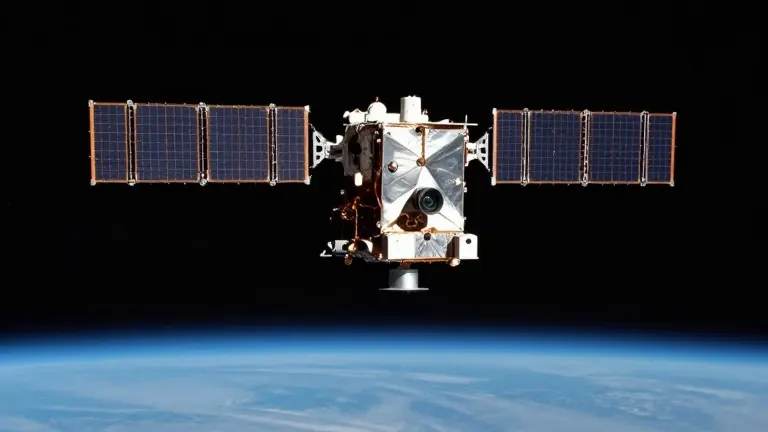
Space traffic monitoring faces a persistent blind spot when satellites enter Earth's shadow. Anduril Industries announced Tuesday that a new sensor system has successfully tracked spacecraft during these dark periods.
The company confirmed the success of a technology demonstration on the Anduril-216 spacecraft. This oven-sized satellite launched in July on a SpaceX rideshare mission. It orbits approximately 590 kilometers, or 366 miles, above Earth.
Anduril-216 carries a package of demonstration payloads, including an edge-compute processor and a power-management system. The key component for this announcement is a long-wave infrared space sensor. This device is designed to detect other objects in orbit when direct sunlight is absent.
The satellite spends about one-third of its orbital cycle in darkness. These night passes allow the infrared imager to operate without interference from the sun. Gokul Subramanian, Anduril’s senior vice president of engineering, noted that the sensor offers a huge dynamic range. He stated that the system has very low solar exclusion, meaning it is rarely blocked by the Sun and can see objects in full dark.
Current space surveillance relies on ground-based radars and optical sensors. Optical tracking struggles when satellites enter Earth's shadow. If a spacecraft performs a maneuver during this time, monitors may lose track of it. Adam Thurn, vice president and general manager of orbital systems at Anduril, explained that ground sensors are not located in adversaries' sovereign lands. He added that visible sensors cannot see satellites that are not illuminated by the Sun.
The Space Force tracks satellites to monitor potential adversary movements and issue collision alerts. Maintaining continuous visibility is necessary for mission planning and safety. Anduril acquired ExoAnalytic Solutions, a commercial satellite-tracking company, earlier this year. The new hardware aims to combine with that data to close the visibility gap during orbital night.
The demonstration validates the use of long-wave infrared technology for space situational awareness. By detecting maneuvers in the dark, operators can maintain a consistent picture of orbital activity. The successful test marks a specific step in monitoring space traffic under all lighting conditions.
More Tech · National news · Report a business · Got a Story?