Hebron residents face uncertain return after rapid IDF evacuation
Support and Relief Committee data shows 2,649 people displaced, with many lacking safe housing or clear timelines for going home.
By Alexei Malhotra ·
The Israel Defense Forces removed 2,649 residents from their homes in Hebron this week without providing a set schedule for their return. Riad Khamis, the spokesperson for Hebron’s official Support and Relief Committee, stated on Monday that military officials gave families minimal time to pack. Khamis noted that no assurances have been offered regarding when or if the displaced families will be permitted to re-enter their homes.
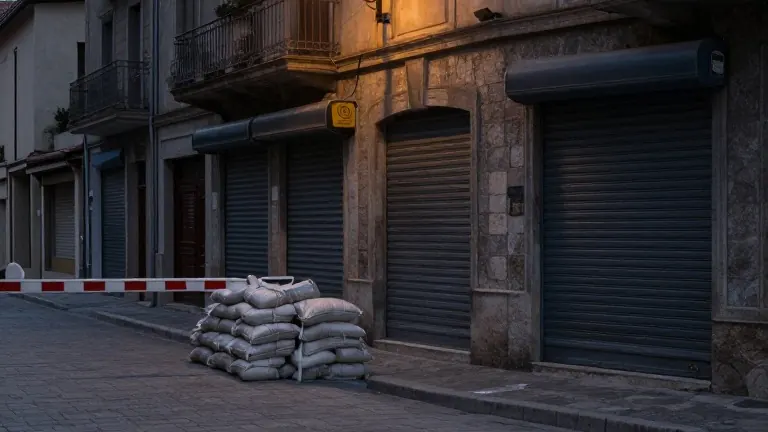
The military action followed a Friday attack by Ahmad and Hamouda Al-Jabar, two Palestinians from the Ein Deir Bahha neighborhood. The incident killed two Israeli soldiers and injured several others. In response, the IDF erected new checkpoints and ordered evacuations in several districts, including Ein Deir Bahha, Al-Jilda, Khillet Al-Magharbeh, and Farsh Al-Hawa.
Data collected by the committee on Monday indicates that 407 households were affected by the operation. Of the 2,649 people displaced, 1,109 were minors under the age of 18. This group included 180 children under the age of two. The displaced population also comprised 218 elderly individuals, 115 pregnant or postpartum women, 28 people with disabilities, and 162 individuals living with chronic illnesses.
Milena Ansari, director of the Palestinian Territory Department at Physicians for Human Rights Israel, warned on Sunday that the disruption poses severe risks for those with ongoing medical needs. Ansari stated that patients with diabetes, hypertension, kidney disease, or cancer rely on consistent treatment. She explained that arbitrary closures interrupt this care and separate patients from their medications, doctors, and medical records. Ansari added that conditions manageable with routine care can become emergencies when access to care is blocked, a risk exacerbated by the approaching winter.
Most displaced residents have secured alternative housing by staying with relatives or renting other properties. However, Khamis reported that 168 households still lack safe accommodation. He described a humanitarian reality where families have no suitable option beyond overcrowded relatives' homes. Some families were forced to spend the night outdoors. Khamis said these families are struggling to obtain basic necessities.
The committee identified specific material needs among the displaced population. Data shows that 231 households require food supplies, while 129 need medicines. Additionally, 107 households are in need of baby formula and diapers, and 126 require shelter. Other families have submitted requests for clothing, mattresses, blankets, and psychological support.
Khamis said families complained that the evacuation took place under high-pressure conditions without clear information. He stated that the military communicated only through notices and demands to leave. These notices did not specify the duration of the operation or the nature of the measures being taken. Khamis said there was no direct communication with military officials to clarify these points.
The committee reported that Israeli authorities have not established arrangements to assist elderly, disabled, or sick Palestinians during the evacuation. Khamis noted that this lack of support presents a humanitarian challenge for families requiring ongoing medical care or assistance. The IDF has not yet responded to a request for comment regarding these allegations.
Source: The Jerusalem Post