Terafab Targets 1 Terawatt Annual Output, Surpassing Many National Economies
A new Texas facility aims to generate chip production value equivalent to the 20th largest global economy, challenging industry capacity limits.
By Claire Darwish ·
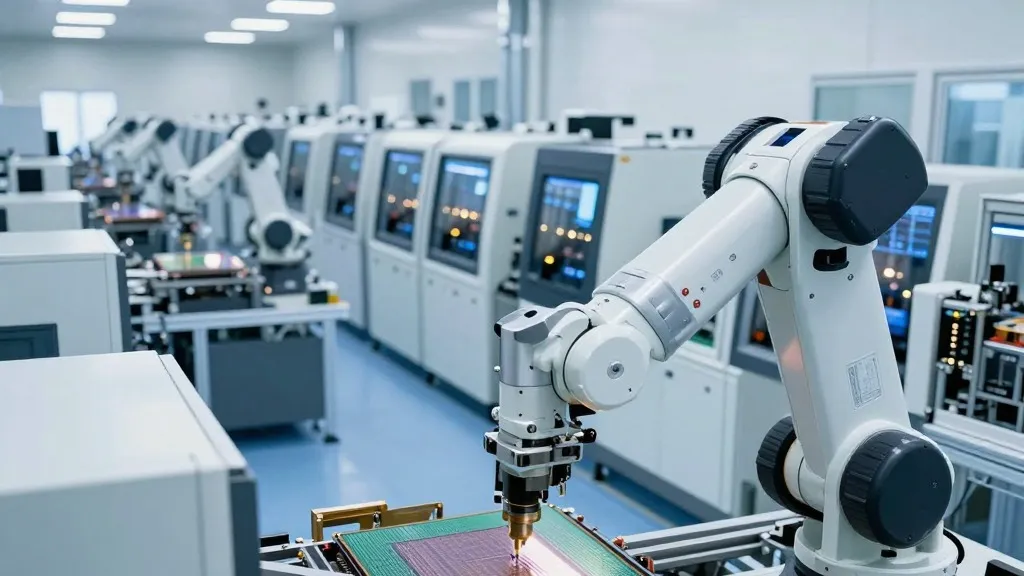
The planned Terafab semiconductor facility targets an annual output of one terawatt of artificial intelligence computing power, a scale that Elon Musk claims would place the single physical building within the top 20 global country gross domestic products. For context, the 20th-ranked nation is Switzerland, with an estimated economic output of approximately $1.14 trillion. This ambitious projection underscores the sheer commercial magnitude of the joint venture between Tesla and SpaceX, which seeks to vertically integrate the production of logic, memory, and advanced packaging in one location.
The path to this milestone has been defined by aggressive scheduling and significant supply chain collaboration. In April 2026, Intel joined the venture to co-develop silicon fabrication technology, providing access to its 14A manufacturing node. This partnership relies heavily on ASML, the exclusive commercial supplier of extreme ultraviolet lithography systems, each valued at $400 million. Unofficial sources had previously indicated that the first EUV tool was scheduled for delivery in mid-2027, though it remains unconfirmed if this represents the accelerated timeline referenced in recent announcements.
During a live broadcast of SpaceX’s third-quarter 2026 earnings call on X on October 20, Musk announced that ASML and other critical suppliers have expedited shipments to support the project’s aggressive goals. He expressed appreciation for these accelerated deliveries, noting the timeline carries "big error bars" while targeting volume chip production at the primary Gibbons Creek, Texas, facility by the third or fourth quarter of 2028. SpaceX also plans to manufacture its first experimental test chip at its Austin research fabrication facility around the second quarter of 2027.
Beyond the physical fab, Musk outlined substantial computing capacity expansions for his AI enterprises. He expects 2.5 to 3 gigawatts of active computing capacity by the end of 2026, with high confidence in adding 10 gigawatts in 2027. This would bring total capacity to 13 gigawatts by the end of 2027, achieved through the aggressive procurement of next-generation NVIDIA architecture, including a 440,000-GPU Vera Rubin training cluster coming online by the second quarter of 2027.
The project mandates extensive cooperation across the global semiconductor supply chain. Beyond ASML and Intel, key partners include Applied Materials, Lam Research, KLA Corporation, and Tokyo Electron, which provide front-end processing and metrology equipment. Tesla and SpaceX are also in negotiations with approximately 10 South Korean manufacturers, including Hanmi Semiconductor and HPSP, for advanced packaging and specialized components. Terafab aims to mitigate future shortfalls of cutting-edge processors from external foundries, supplying chips for xAI clusters, autonomous vehicles, Optimus robots, and orbital data centers.
Despite the detailed roadmap, experts have questioned the feasibility of the one-terawatt ambition. Gartner estimates the total global AI-optimized data center capacity at roughly 44 gigawatts as of late 2026, which accounts for only 4.4% of Terafab’s planned output. While EpochAI notes that global AI computing capacity has grown by roughly 3.3 to 3.4 times per year since 2022, the leap required to reach Terafab’s target remains a significant challenge for the industry.
The facility is expected to reach full operational status in the coming years, with the goal of becoming a self-sufficient engine for the broader AI industry. If the aspirational timeline holds, the Gibbons Creek site will stand as one of the most significant industrial achievements in semiconductor history, fundamentally reshaping the landscape of high-performance computing infrastructure.
Source: Tom's Hardware · original report published