Tesla Optimus Delivery Target Slides to Late 2027 Amid Persistent Hardware Hurdles
Tesla executives admit that mechanical reliability and AI generalization remain significant obstacles, pushing the timeline for external robot sales further out while competitors accelerate their own production schedules.
By Alexei Malhotra ·
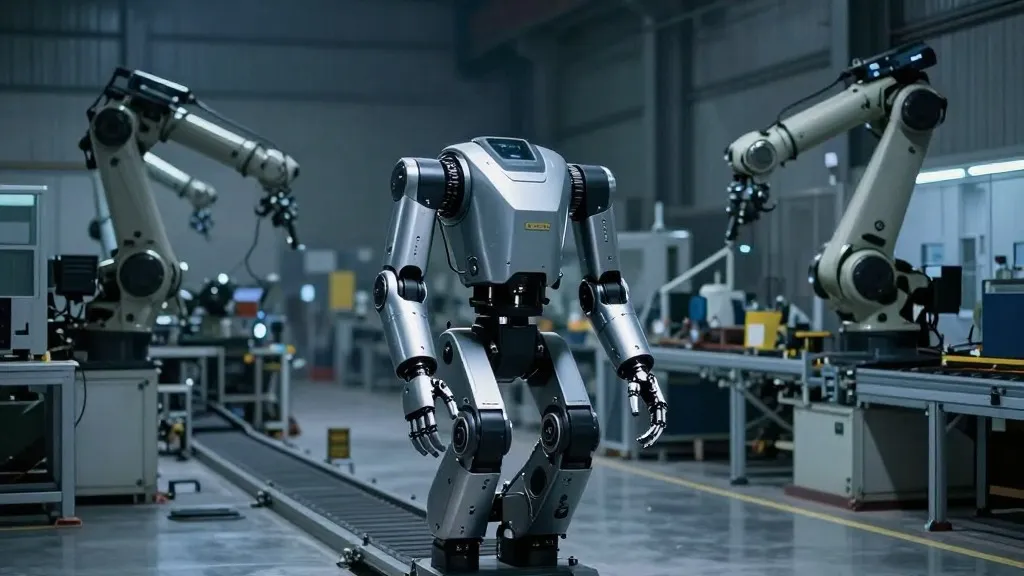
The gap between Tesla’s ambitious robotics narrative and the mechanical reality of its Optimus units has widened, with the company now officially targeting late 2027 for the first external deliveries of its humanoid robots. During the Q3 2026 earnings call, Elon Musk acknowledged that the timeline is driven by unresolved issues in the robot’s hands, overall durability, and artificial intelligence capabilities. This latest update represents another shift in a timeline that has slipped repeatedly since the project’s inception, raising questions about whether the promised mass-market utility is closer or further away than investors have been led to believe.
Tesla has begun early production of the Optimus on a high-volume line at its Fremont, California facility, a site previously dedicated to Model S and Model X production. Musk stated that while the majority of the assembly line, designed to theoretically produce one million units annually, is installed, reaching that capacity will take at least a year. The company aims for a weekly output of approximately 20,000 units, but he cautioned that ongoing design changes will delay full-scale throughput. The initial external sales are expected to target industrial applications where the work is dangerous, repetitive, or requires continuous operation.
The primary mechanical challenge cited by Tesla engineers is the design of the robot’s hands. A Tesla Optimus engineer noted on the call that the fingers must be soft enough to handle delicate objects yet durable enough to withstand constant wear, a contradiction that is difficult to solve given that robots cannot heal like human skin. Custom gears also remain a point of concern for reliability. Musk agreed that the hand is the main hardware issue, alongside broader electromechanical design and reliability problems that must be resolved before the end of next year.
On the software side, Tesla faces a distinct data challenge compared to its automotive division. Unlike its cars, which have a large fleet collecting data for Full Self-Driving (FSD), Tesla does not currently have a massive fleet of robots generating real-world usage data. To address this, the company plans to build between 10,000 and 20,000 robots to practice tasks in a facility dubbed the Optimus Academy. Additionally, Tesla intends to integrate its AI5 chip into the Optimus platform around April 2027. Musk promised a video demonstration within one to two months showing the robot performing unscripted tasks, arguing that many current industry demos rely on pre-programmed routines that fail in real-world conditions.
However, internal documents suggest the current hardware is only now reaching a baseline standard. Tesla’s Q3 shareholder letter described the units coming off the Fremont line as the first “production-quality” bots the company has manufactured, implying that previous iterations did not meet this threshold. This aligns with reports from last month indicating that while production had ramped to hundreds of units per week, the robots struggled to generalize to new tasks. The hand and forearm assemblies, containing over 100 small parts assembled by hand, have faced reliability issues with touch sensors, and the AI has reportedly taken days to learn basic functions.
The shifting timeline is part of a broader pattern of adjustments. In 2024, Musk suggested internal use in 2025 and high-volume external sales in 2026. By January 2025, he predicted the construction of 10,000 robots that year, with several thousand performing useful work by year’s end, a goal he later admitted was not met. The current target of late 2027 for external deliveries continues this trend of incremental delays.
Musk’s claim that no competitor is “even close” to Tesla in developing general-purpose humanoids is now facing increased scrutiny. XPeng, a Chinese automaker, turned on an automated IRON production line in Guangzhou in September, automating more than 80% of core processes. IRON features 21 degrees of freedom in each hand and runs on XPeng’s in-house Turing chips. The company plans mass production by the end of 2026, with deliveries beginning in the first half of 2027 for stores and malls, followed by a European rollout in the second half of 2027. While XPeng has not yet shipped to a paying customer, its timeline mirrors Tesla’s closely.
Meanwhile, Boston Dynamics, which began producing its electric Atlas robot in January, has reported that all its 2026 deployment slots are committed, including to Google DeepMind. In September, the company opened a robot training center at Hyundai’s Metaplant in Georgia, where Atlas is learning to sequence car parts. Hyundai plans to deploy 25,000 robots across its plants in the coming years. Notably, Boston Dynamics hired Milan Kovac, Tesla’s former head of Optimus, in January. The company has taken a pragmatic approach to the hand problem by prioritizing sturdy industrial grippers over human-like dexterity, effectively sidestepping the specific hurdle Tesla says is holding it back.
The competitive landscape suggests that while Tesla may have produced the most units, the advantage of scale is being offset by competitors’ specific industrial strategies. The critical test for Tesla will be the upcoming video demonstration. If Optimus performs genuine, unscripted work, it may validate the late-2027 timeline. However, given the history of delayed promises and the persistent mechanical and AI challenges, skepticism remains warranted regarding whether this latest date will hold firm.
Source: Electrek · original report published