Israelis vote Tuesday in a war-torn race likely to produce no clear winner
With the Knesset's 120 seats at stake and polls showing a deadlock, Israelis head to the polls amid ongoing conflicts in Gaza, Lebanon, and Syria.
By Claire Darwish ·
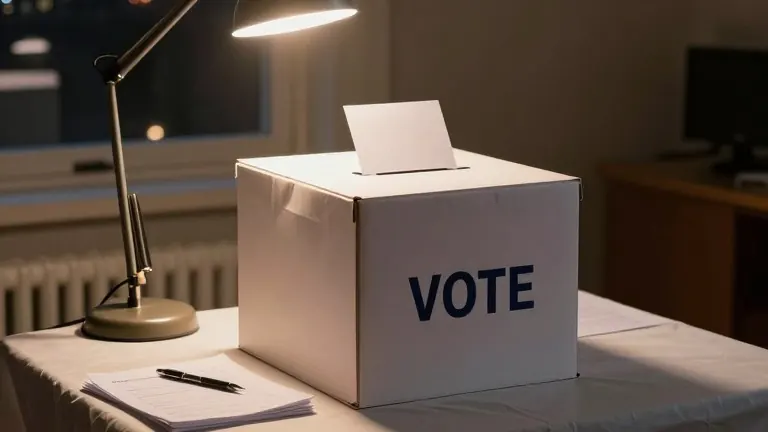
Prime Minister Benjamin Netanyahu enters his fourth term bid on Tuesday as Israelis cast ballots in an election that most polls predict will end in a stalemate. The vote comes three years after the October 7, 2023, Hamas attack, which Israeli authorities acknowledged as the deadliest day in the nation's history since 1948. The country remains engaged in multi-front wars in Gaza, Lebanon, and Syria, with Netanyahu advocating for a third direct conflict with Iran.
Polling data suggests neither the right-wing bloc led by Netanyahu nor the opposition change bloc will secure the 61 seats required to form a unilateral government. Yohanan Plesner, president of the Israel Democracy Institute, called an indecisive outcome the most likely result. This potential deadlock could trigger protracted negotiations, the formation of a minority government, or a repeat election. Israel held five elections between 2019 and 2022 under similar circumstances.
Netanyahu, Israel's longest-serving prime minister, argues that his leadership is essential to prevent Iran from acquiring a nuclear weapon and to keep Arab parties out of the coalition. He recently shared an AI-generated image of a mushroom cloud over Tel Aviv to underscore this threat. His campaign slogan in Hebrew translates to either right wing or Palestine, or right wing or a nuclear bomb. President Donald Trump endorsed Netanyahu last week, warning that the United States might have to handle the Iran conflict alone if Netanyahu loses power.
The main challenger is former military chief Gadi Eisenkot, who leads the centrist Yashar party. Eisenkot lost his son and two nephews in the Gaza war and served in the war cabinet alongside Netanyahu for much of its first year. He has promised to launch a state inquiry into the intelligence failures that allowed the October 7 attack. About half of Yashar's candidates are women, a sharp contrast to the male-dominated Netanyahu coalition. Eisenkot criticized Netanyahu for relying on fear-mongering and threats to win the vote.
Voter turnout among Arab Israelis, who comprise roughly 20% of the population, may be the deciding factor. Jehad Abomoch, a cafe owner in Baqa al Gharbiya, said the last four years have been a catastrophe for his community. Plesner noted that higher Arab turnout makes it less likely that Netanyahu can form his current type of coalition. Two new parties focused on drafting ultra-Orthodox citizens into the military also hover near the threshold for Knesset seats, potentially tipping the balance in either direction.
If no bloc wins a majority, lawmakers may switch sides to form a coalition, a common practice in Israeli politics. Alternatively, the change bloc could form a minority government if it wins more seats than the opposition but less than half of the total. Arab parties could support this by voting in favor or abstaining. If neither path is viable, the country will hold new elections. Plesner said most politicians are not interested in that outcome, but it remains a realistic possibility if candidates refuse to break their campaign promises.
Source: CBS News