Election Day: Israel's Final Vote Hinges on Trust in Military and Leadership
A report on a standoff between Netanyahu and the army chief, combined with a viral AI image, frames the final debate before Tuesday's vote.
By Claire Darwish ·
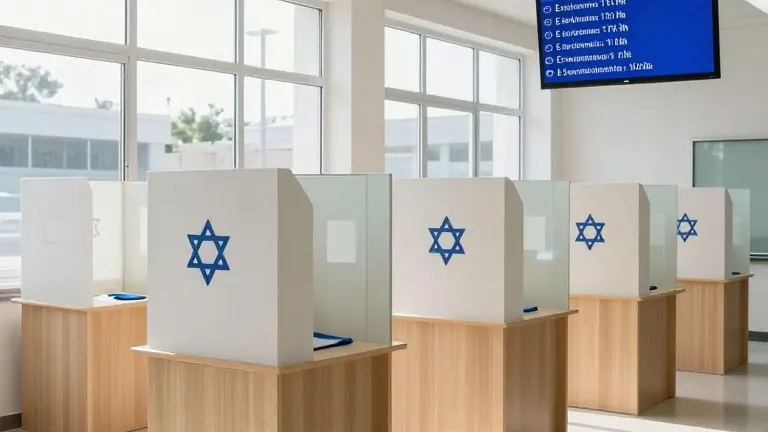
Israelis are heading to the polls on Tuesday to decide who will lead the country, with the final campaign days dominated by a single question: whom do voters trust regarding the threat from Iran? The debate has narrowed to whether Prime Minister Benjamin Netanyahu remains the only leader capable of preventing a second Holocaust or if the opposition is now better suited to handle national security.
The conflict came to a head on Sunday when Netanyahu shared an artificial intelligence-generated image of a nuclear explosion over Tel Aviv. The post warned that his defeat could leave Israel vulnerable to an Iranian attack. This message linked the nation's survival directly to his continued tenure, asking voters to believe that decades of institutional strength cannot protect the country without him at the helm.
That argument was challenged the same night when N12 News reported a confrontation between Netanyahu and Israel Defense Forces Chief of Staff Lt.-Gen. Eyal Zamir. According to the report, Zamir resisted an instruction for an undisclosed military operation that defense officials feared might trigger a wider conflict with Iran. Zamir reportedly sought further deliberations and signed documentation concerning the legal authorization of the move. Netanyahu denied any tension or confrontation with the military’s top brass over the issue.
The report gave opposition candidates a platform to question whether the military leadership truly trusts the prime minister’s judgment. For some voters, the story serves as evidence that professional military officers are trying to restrain a leader whose political motives are shaping security decisions. For others, it appears to be another anonymously sourced story released at a strategically damaging moment, similar to the earlier, contradicted report about an Egyptian intelligence chief visiting Israel before October 7.
The backdrop of the October 7 attacks complicates this trust dynamic. While many instinctively view the military as a professional counterweight to political calculation, the security establishment’s failure on that day makes automatic deference harder to sustain. Voters who remember the disaster may question whether military officials’ current judgments deserve special weight. Conversely, Netanyahu bore ultimate political responsibility on October 7, meaning his leadership also carries a cloud of doubt.
The election forces a choice between two competing narratives. Netanyahu argues that the danger from Iran is too great to replace him, citing his experience and international standing. His opponents counter that the danger is too great to leave him in place, pointing to the military’s reported hesitance as proof of internal doubt. Both sides are making their case against the backdrop of a day that exposed the limits of both political and military expertise.
On Tuesday, voters will select parties that will form the next government, a body tasked with addressing issues far beyond the Iranian threat. Yet the final campaign arguments have sharpened the choice into a direct vote on credibility. Israelis will decide whether to credit the prime minister's warnings or the military's reservations, determining which set of leaders they believe can navigate the coming challenges.
Source: The Jerusalem Post