Lula Secures Reelection in Brazil, Prompting Immediate Funding for Amazon Protection
President Lula defeated Flávio Bolsonaro in a close runoff, leading to a $500 million pledge from the Netherlands for a forest conservation fund while legislative challenges loom.
By Thiago Cruz ·
Brazilian President Luiz Inácio Lula da Silva secured his reelection on Sunday, defeating Senator Flávio Bolsonaro in a narrow runoff. Lula captured 51.78% of the vote against Bolsonaro's 48.21%, resulting in a victory margin of 4.4 million votes. The outcome follows a first-round race where Lula initially trailed but subsequently reversed his position.
The result has drawn immediate financial support for environmental initiatives. The Netherlands pledged $500 million on Monday to the Tropical Forest Forever Facility, a fund supported by Brazil that was launched at last year's U.N. climate summit. This contribution brings total commitments to the fund to $7.8 billion, though the organization is still short of its $10 billion target for the end of the year. Claudio Angelo, head of international policy at Brazil's Climate Observatory, stated that the Dutch pledge serves as a vote of confidence in Lula's victory, noting that prospective donors had previously paused their plans pending the election results.
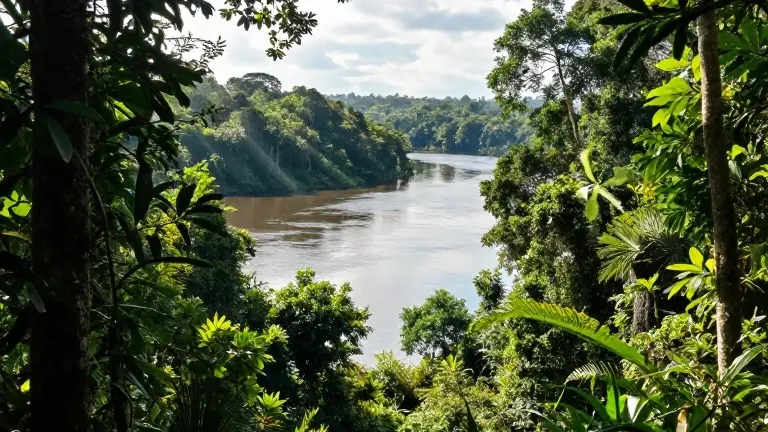
Environmental groups and scientists have responded positively to the reelection, citing the continued potential for strong forest protection. David Lapola, a Brazilian scientist and lead author of a chapter in an upcoming U.N. climate report, said the Amazon can breathe a sigh of relief. The Amazon rainforest absorbs large quantities of carbon dioxide, and about 60% of the forest is located within Brazil. Lapola noted that scientists are currently debating the tipping point beyond which the humid rainforest could shift to a drier ecosystem, causing irreversible changes to biodiversity and climate.
Indigenous organizations played a key role in the election process. The Articulation of Indigenous Peoples of Brazil, known as APIB, successfully petitioned courts to secure government transportation for voters in remote areas. The group attributed Lula's victory to the strength of grassroots mobilization in defense of democracy and Indigenous rights. In the Amazon region specifically, these efforts helped increase voter turnout among Indigenous communities.
However, political analysts and advocacy groups warn that legislative hurdles remain. The incoming Congress is expected to be dominated by far-right and agribusiness representatives. Brazil's Climate Observatory, a coalition of 172 organizations, reported that seven in 10 incoming lawmakers oppose the current climate and environmental agenda. The group cited recent measures that weakened pesticide rules, Indigenous land rights, and environmental licensing as evidence of these legislative trends.
Ana Alfinito, a legal adviser at Amazon Watch, stated that a Congress strengthened by forces seeking to open Indigenous lands to mining remains a serious threat to environmental protections. Flávio Bolsonaro, who refused to concede on Monday, said he would ask the electoral court to nullify the results. He faces the task of presenting evidence of fraud sufficient to overturn the winning margin before the results are certified on December 18. Early signals from regional leaders suggest the outcome will be accepted.
Lula's administration has maintained policies aimed at curbing deforestation, having announced the lowest Amazon deforestation rate on record last week. His predecessor, Jair Bolsonaro, saw deforestation surge during his term from 2019 through 2022 after weakening environmental enforcement agencies. While Lula has supported offshore oil drilling near the Amazon, which drew criticism, he is expected to continue financing a sustainable economy through international and domestic funding.
The World Wildlife Fund for Nature in Brazil stated that the country's share of the Amazon gives it a strategic role in addressing climate change. The organization credited Lula with strengthening Brazil's leadership through international cooperation. It emphasized that maintaining this leadership is essential to raising the ambition of global commitments and turning agreements into concrete action.
Source: Boston Herald