Syrian Tensions: US envoy signals split with Israel over Suwayda
Tom Barrack's recent comments suggest Washington prefers a strong central government in Damascus, a stance that conflicts with Israeli support for local Druze leaders in the south.
By Alexei Malhotra ·
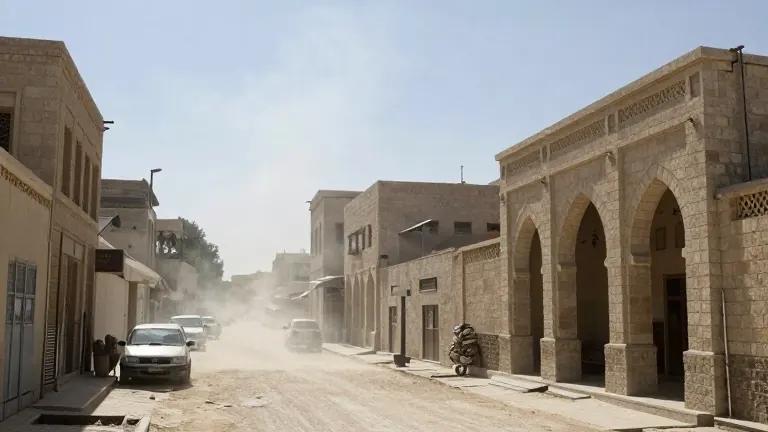
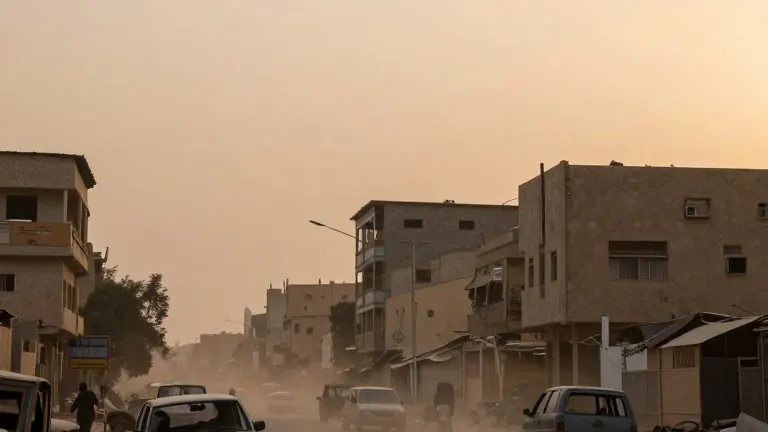
The southern governorate of Suwayda remains a contested zone where the Syrian government holds limited authority. On Friday, US special envoy Tom Barrack indicated that Washington views the region as central to national stability rather than a separate entity.
Barrack spoke to Australian journalist Mario Nawfal about the status of the Druze-majority province. He referenced a specific sheikh, believed to be Hikmat al-Hijri, whose National Guard has been accused of receiving Israeli support. Barrack’s remarks were interpreted as a clear signal that US backing for the new Syrian leadership does not automatically extend to al-Hijri’s faction.
This diplomatic posture contrasts with Israel’s approach since the fall of Bashar al-Assad’s regime in December 2024. Israel seized territory in Quneitra governorate and has bombed the Syrian Ministry of Defence. Israeli Prime Minister Benjamin Netanyahu has maintained a harder line toward the new government led by Ahmed al-Sharaa than President Donald Trump, who has prioritized stability after 13 years of conflict.
Navvar Saban, a researcher at the Arab Center for Contemporary Syrian Studies, noted that Barrack’s message clarifies the distinction between American and Israeli interests. “Israel backing [al-Hijri] does not equal American backing,” Saban said. “Washington has prioritised an agreement with Damascus while Israel retains its own security demands and relationship.”
The current deadlock in Suwayda stems from deadly sectarian clashes in July 2025 between Bedouin tribes and Druze residents. Government forces reportedly joined the Bedouin side, resulting in casualties that were overwhelmingly Druze. Israel intervened during the fighting and has since sought to build influence among local communities, including al-Hijri, who opposes the new leadership in Damascus.
In September 2025, the United States and Syria signed a trilateral agreement in Amman. The deal requires Syria to invite an independent international commission to investigate the July 2025 violence and prosecute perpetrators. However, trust between the central government and the south remains low. Residents feel the pressure of government control through salary adjustments and exam requirements.
Analyst Nanar Hawach stated that Israel uses Suwayda as a lever against Damascus. “Israel appears intent on a lasting military presence in southern Syria, and it uses Suwayda as a lever against Damascus,” Hawach said. “It offers enough support to keep the province reliant on Israeli protection and too little to secure its future.”
Source: Al Jazeera